
Vibro-compaction solutions hold great importance in the fields of construction and engineering, because they contribute significantly to improving soil quality and increasing the stability of structures. These solutions rely on using mechanical vibrations to induce effective compaction of the soil which leads to reducing air voids, decreasing the spaces between particles and increasing soil density. In this article, we will talk about vibro-compaction solutions, their benefits, and the different types of soil in which vibro-compaction can be used.
What is vibro-compaction?
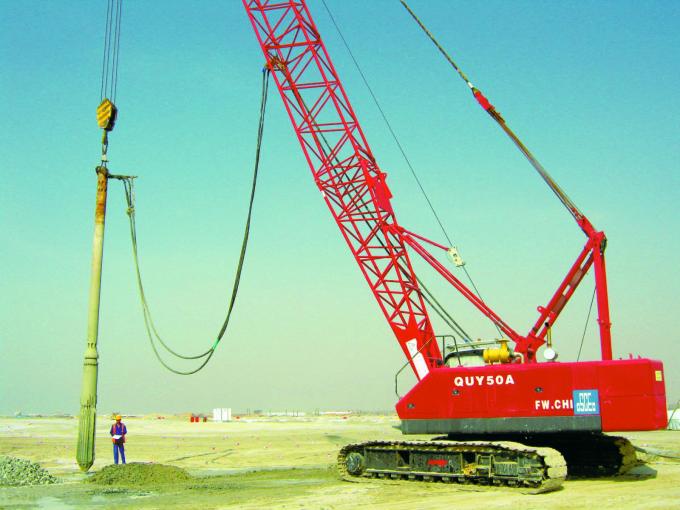
Vibro-compaction solutions are one of the important solutions that are used to improve soil properties before construction operations. This method has spread significantly in recent times as it can be used in more than one type of soil. It involves rearranging soil particles to reduce the pores existing between them which leads to increasing soil density, increasing its strength and its ability to bear different loads and weights better and more safely. This method is carried out by using special equipment such as vibrating plates and rollers. This type of compaction is mostly used in large projects, airports, highways and other vital projects.
Benefits of vibro-compaction
There are many benefits that can be obtained when using vibro-compaction solutions to improve soil before construction operations, the most important of which are:
- It is considered one of the best economical methods with a relatively low cost for soil improvement.
- It is considered one of the most environmentally friendly methods and does not cause any soil pollution as no harmful chemicals are used in it.
- This vibro compaction method significantly helps maintain the original site elevation without the need for replacement or substitution.
- It increases soil cohesion and increases its bearing capacity.
- It can be used for different types of soil.
- This method is suitable for both large and small projects.
- It raises the safety level, especially in cases of earthquakes.
- It covers the largest area in the shortest possible time.
- This method is characterized by its relative ease of application which makes it one of the most widespread methods for vibro ground improvement.
Vibro-compaction solutions
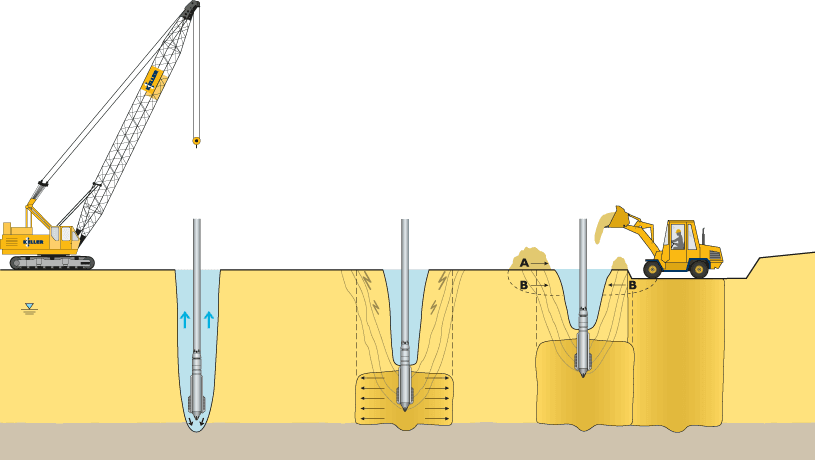
Vibro-compaction solutions rely on powerful vibrating tools such as vibratory probes which are inserted into the soil to a specific depth. These tools induce high-frequency vibrations in the soil which leads to rearranging its particles and making it denser. This method is carried out by using an excavator or crane equipped with a vibratory probe. The self-weight of the probe and the pressure that is applied by the crane, along with the pulling force and the continuous horizontal vibrations of the vibratory probe, help penetrate and reach the appropriate depth of the soil that is intended to be improved.
This probe is gradually lifted in stages while vibration continues, and these steps are repeated frequently at closely spaced points according to a specific design based on the soil type, probe type, and the required project specifications. It is considered one of the best methods through which suitable treatment depths can be reached which helps in constructing large projects safely.
Differences between vibro-compaction and traditional compaction methods
Vibro-compaction is considered one of the best methods that can be used due to its speed which makes it a method that saves significant time and effort in various required engineering projects. It can also be used in different types of soil and leads to increasing their density and soil strength in the shortest possible time compared to some other methods. Vibro-compaction differs from other traditional methods in the mechanism that is followed as vibrations enhance the effectiveness of the compaction process and facilitate the rearrangement of particles.
As for traditional methods, they rely primarily on static pressure without applying vibration and therefore they may be more suitable for cohesive soil. The optimal compaction method varies depending on the soil type and its engineering properties. It also varies according to the project size as the larger the project size, the better it may be to use powerful vibrating equipment such as vibratory probes to increase soil density and strength effectively and quickly on a large scale.
There are other types of compacting equipment or rammers that can be used, such as jumping jack or tamper rammers which are suitable for narrow spaces and trenches. Plate compactors or vibro compactors can also be used, and they are often used in narrow places and small projects.
Soil types that can be improved using vibro-compaction

Vibro-compaction solutions are used effectively in different types of soil which are:
- Loose sands: These respond very well to vibro-compaction due to their non-cohesive nature and ability to rearrange under vibration.
- Gravels: they are clean and contain minimal fines, gravels can be effectively densified.
- Sandy gravels: Mixtures of sand and gravel can be improved as long as the fine content is low.
Evaluating and determining the soil type is the first and essential step to choose the appropriate method for compaction. Vibro-compaction is considered one of the best methods that can be used because it is particularly suitable for different types of granular soil, and contributes significantly to the long-term success of the project, ensuring the stability of the structures built on it and reducing the expected differential settlement.
Challenges that may be faced when using vibro-compaction
There are some challenges that may be faced when using vibro-compaction solutions, the most important of which are:
- Inaccurate assessment of the soil type and its properties and choosing an unsuitable compaction method for it.
- Lack of necessary and appropriate equipment and tools to carry out vibro-compaction works.
- Relatively high initial costs before construction operations, especially when not included in the project budget, but it often saves costs in the long run by reducing foundation problems.
- Lack of specialized and trained technicians and operators who can efficiently handle vibro-compaction techniques and their equipment.
Vibro-compaction solutions are considered from the most important methods that are used to improve soil density and strength before construction operations, but it is necessary to rely on a specialized and experienced company such as WHC to achieve the desired results and ensure the quality of execution.
FAQs
What is the vibro replacement technique?
It is a method that is used to improve the soil and increase its bearing capacity. It relies on creating a set of columns made of granular or aggregate materials using a vibratory probe. It is used particularly in mixed soil types or those containing a proportion of fine grains.
What is the meaning of 95% compaction?
95% compaction means that the soil has been compacted to reach 95% of the maximum dry density that can be achieved in the laboratory using the standard or modified Proctor test. Compaction to 95% is considered the minimum acceptable target compaction usually required when constructing large projects, roads, bridges, and other important infrastructure. The required compaction percentage is determined based on the project specifications, its nature, and importance.
What is the best way of compacting?
There are different methods that are used in compaction, including dynamic methods and static methods where a force is applied that presses on the soil which leads to increasing its density and strength. However, vibro-compaction is considered one of the best compaction methods for granular soil where pressure is used along with vibration which helps effectively reduce soil pores and makes it more capable of bearing loads.