
Top piling machines and tools are considered essential elements that are used in the world of building and construction because they play a vital role in creating deep foundations capable of transferring structural loads to strong soil layers or rock. These tools are used to execute various types of piles to enhance foundation stability and reduce risks associated with excessive settlement and cracking. The types of piling machines and tools vary from one site to another and from one project to another depending on some factors. In this article, we will talk about the top piling machines and tools and the advantages of their use.
Top piling machines and tools
When discussing the top piling machines and tools, it is necessary to recognize the different types available in the market from piling equipment list which primarily include:
Pile driving equipment

- Drop Hammers: Rely on lifting a weight and letting it fall freely onto the pile head.
- Diesel Hammers: Use the explosion of diesel fuel to drive a piston that strikes the pile and it is available in two types: open-end and closed-end.
- Hydraulic Hammers: Use hydraulic oil pressure to lift and lower the hammer, offering better control over the driving energy.
- Vibratory Hammers: Use high-frequency vibrations to liquefy the soil around the pile and facilitate its penetration, particularly effective in non-cohesive granular soils you can know more about vibro-compaction for soil stablization.
Pile boring/drilling equipment

- Rotary Drilling Rigs: Use rotary drilling tools to remove soil and form the pile borehole and often used with temporary casing and drilling fluid to prevent borehole collapse.
- Continuous Flight Auger (CFA) Rigs: Drill the soil using a continuous hollow stem auger then concrete is pumped through the auger as it is withdrawn upwards to form the pile shaft.
- Diaphragm Wall Rigs / Hydrocutters: Used to construct deep concrete walls in the ground.
- Micropile Equipment: Used to install relatively small-diameter piles through drilling and grouting.
How do different soil conditions affect the choice of piling equipment?
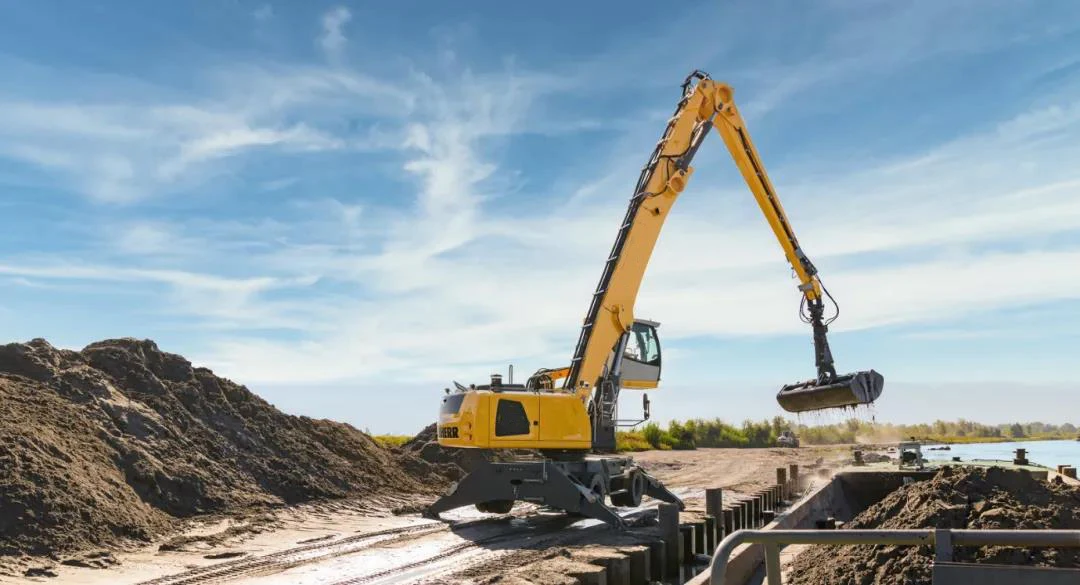
Soil conditions are considered one of the most important factors relied upon when selecting the top piling machines and tools, because the effectiveness of these tools and the installation technique varies with the type of soil:
- Granular soils: Driven piles using various hammers or vibratory hammers or CFA piles may be suitable.
- Cohesive soils: Bored piles Rotary Bored Piles or CFA Piles are often preferred to avoid significant soil displacement or severe driving vibrations.
- Rocky soils: May require powerful rotary drilling rigs equipped with special rock drilling tools or resorting to micropiles.
- Presence of groundwater: The groundwater level affects the choice of drilling method in order to improve the soil and the need for casing or drilling fluid like bentonite.
- Site conditions: Available space, environmental constraints and proximity to adjacent structures play a significant role in selecting equipment and technique.
Advantages of using specialized piling equipment
Several advantages are obtained when using the top piling machines and tools suitable for the work, the most important of which are:
- Ensuring safe transfer of structure loads to strong layers to ensure the stability of structures.
- Reducing the risks of excessive or differential foundation settlement and the resulting maintenance and repair costs.
- Modern equipment can be more efficient in fuel consumption and reduce emissions.
- Some techniques allow reducing the amount of drilling spoil or controlling vibrations and noise.
- Increasing the durability and strength of foundations and improving construction quality.
- Enabling construction on difficult or weak soil types.
- Increasing work efficiency and reducing the time needed for deep foundation execution compared to some other solutions.
- The possibility of utilizing all areas for establishing large projects, even in cases of weak surface soil.
- Reducing construction risks which ensures the safety of the project, its workers, and its users.
- The possibility of implementing all projects according to the required standard specifications, including large projects with high loads.
The effect of piling tools on environmental sustainability
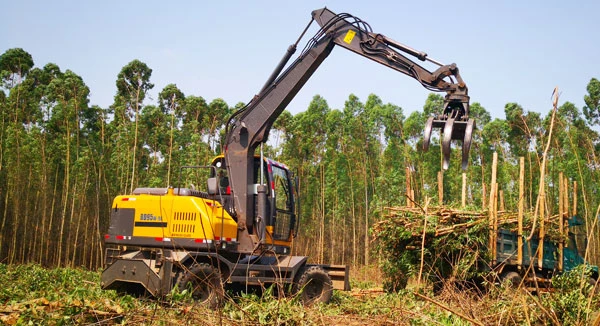
The use of the top piling machines and tools can contribute positively to improving sustainability if selected and used carefully. Choosing the appropriate technique can reduce vibrations and noise that may affect surrounding areas. Some techniques like CFA also contribute to reducing the amount of drilling spoil compared to traditional rotary drilling.
Modern piling equipment also significantly helps in reducing noise and vibration compared to older equipment, especially in densely populated areas. Furthermore, modern technology in this equipment greatly helps improve energy efficiency which reduces fuel consumption and helps mitigate carbon emissions during project execution. Proper management of drilling spoils and fluids like bentonite also reduces potential pollution.
How do piling experts ensure optimal equipment selection and use?
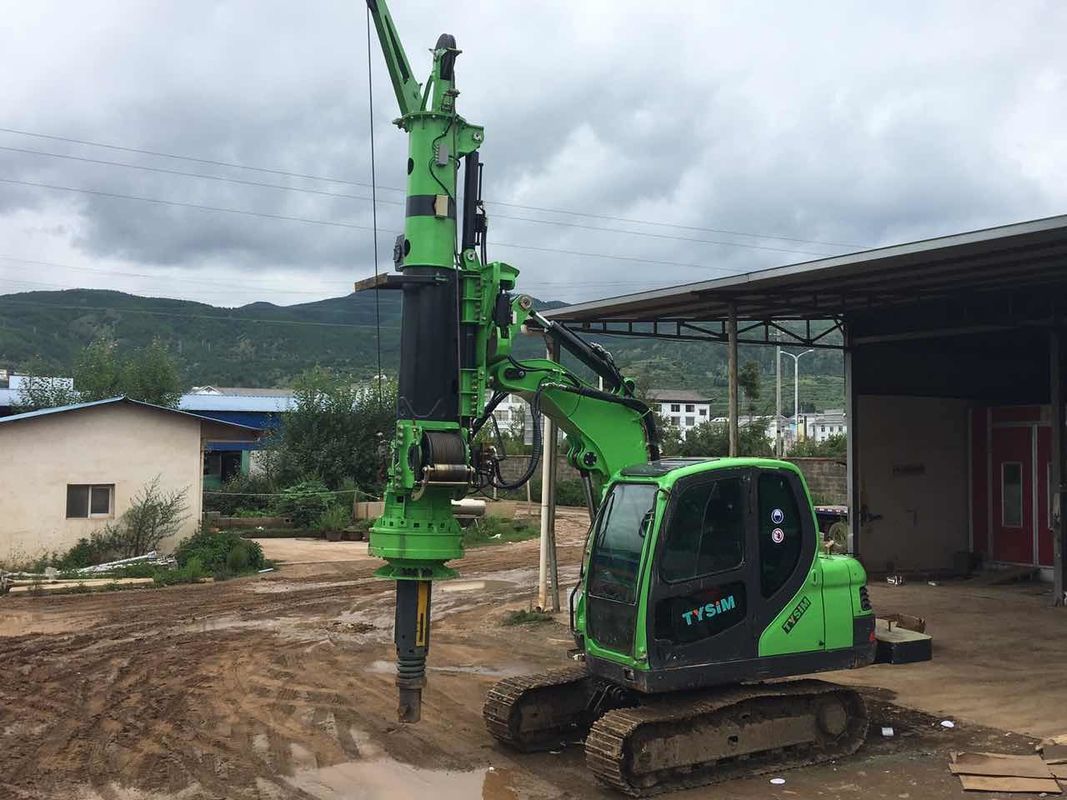
There are many factors upon which the selection of the top piling machines and tools is based. Among the most important of these factors are the soil investigation report and site exploration results, the type, size, and loads of the project, and the type and design of the required pile. Site conditions, budget, and project schedule also contribute significantly to determining the appropriate tools and technique. It is necessary to consult geotechnical experts and specialized contractors in deep foundation works to evaluate the site, select the appropriate equipment, and determine the optimal execution plan before starting the work.
Using the top piling machines and tools significantly helps in executing strong and reliable deep foundations for structures built on weak or problematic soil. Therefore, the use of piling tools and equipment increases in the construction of large and important projects to ensure their stability, durability, and increased lifespan. However, specialized experts must be consulted to ensure the selection of appropriate equipment and technique and the application of correct execution procedures to obtain the best engineering and economic results.
FAQs
What are the three types of piling?
Based on installation, common types are Driven Piles, Bored Piles and Continuous Flight Auger (CFA) Piles. Other classifications exist based on material or load transfer mechanism.
How much does piling machine cost?
The cost of piling equipment varies enormously based on type, size, capacity, brand, and condition as it's impossible to give a single fixed price. Due to the high cost, renting is very common.
Which is better hydraulic hammer or diesel hammer?
Neither is universally better as Hydraulic hammers offer superior control and are quieter with lower emissions which makes them preferred for modern projects, especially in sensitive areas. Diesel hammers can be powerful and simpler but are noisy, polluting, and offer less control but environmental regulations favor hydraulic hammers.
How do you measure piling?
Measuring includes depth and length during installation, installation resistance, verifying position and verticality with surveying, assessing load capacity through static or dynamic load tests and checking integrity using non-destructive tests like PIT or CSL.