
The rise in demand for reliable foundational and economical solutions has grown parallel with the rapid expansion of urban infrastructure and industrial development. More often than not, the traditional support for buildings could only work effectively in very stiff and non-collapsible soils.
Engineers are exploring advanced methods of Ground Improvement, and one such method is Rigid Inclusion Foundation Systems, which are now being highly preferred for several projects.
This innovative solution promises great results in fixing the foundation issue without any form of environmental pollution.
This paper is going to talk about the five most critical aspects of Rigid Inclusion Foundation Systems, including their design, erection, pluses, and their strategic position in the general spectrum of Rigid Inclusion Ground Improvement Services.
Introduction to Rigid Inclusion Foundation
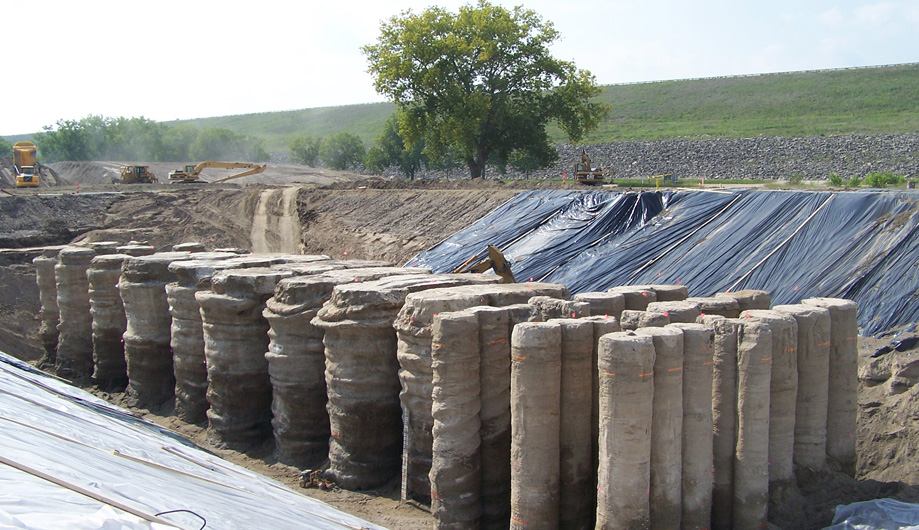
Rigid Inclusion Foundation is a type of ground improvement that consists of the formation of vertical stiff inclusions, usually with concrete, into the weak soil to build up its strength. These inclusions are used to transmit the vertical loading to the hard layers of soil through the soft and loose layers of soil to a harder layer of soil or rock below.
Rigid Inclusion Foundation Systems, unlike the traditional ones, such as deep piles or stone columns, are an environmentally and economically friendly option. The system not only reduces settlements but also enhances load distribution.
One of the important considerations is that the issuance of a proper rigid inclusion specification should be done according to a particular project’s soil and structural conditions.
Why Rigid Inclusion Specification is Critical
A rigid inclusion specification document, an essential part of any engineering process, is a guide for the designing and building of rigid inclusions in Rigid Inclusion Foundation Systems.
It has got:
- Material properties (e.g., concrete strength)
- Dimensions and spacing of inclusions
- Installation methods and equipment
- Load transfer platform requirements
- Quality control measures and testing protocols
The specification confirms that the inclusions will fulfill the load-bearing and settlement requirements and the safety standards. It is also the technical basis for any contract of Rigid Inclusion Ground Improvement Services.
How the Rigid Inclusion Foundation Systems Function
For Rigid Inclusion Foundation Systems, the idea is to control the settlement and transfer the load. The inclusions will behave like vertical stiffened columns, which pick up most of the structural load on their way.
A layer of load transfer platform (LTP), typically a form of compressed granular material, is usually constructed on top of the inclusions.
The platform helps in the efficient distribution of the loads applied, thus, the inclusions and the soil surrounding them are not stressed. The property of the rigid inclusions and the LTP combination stabilizes the foundation and hence reduces the differential settlements, causing structural integrity to be achieved.
Comparison With Other Ground Improvement Techniques

Rigid Inclusion Foundation Systems are part of a suite of Ground Improvement Techniques used to enhance soil properties.
Here’s a comparison with some common methods:
| Technique | Load Capacity | Settlement Reduction | Cost Efficiency | Installation Speed | Typical Applications |
| Rigid Inclusion Foundation Systems | High | High | Moderate | Moderate | Industrial buildings, warehouses |
| Stone Columns | Moderate | Moderate | High | Fast | Roads, embankments |
| Deep Soil Mixing | High | High | High | Slow | Heavy structures, retaining walls |
| Vibro-compaction | Low to Moderate | Low to Moderate | Moderate | Fast | Granular soils, pavement |
This table illustrates why Rigid Inclusion Foundation Systems are often preferred when moderate to heavy loads are involved, and settlement control is crucial.
Supplies Used for the Formation of Rigid Inclusion Foundation Systems
Usually, concrete is the widely used raw material for producing the rigid inclusions in Rigid Inclusion Foundation Systems. The material is often mentioned in the rigid inclusion specification.
The concrete mix has the following particular task of the following:
- Sufficient compressive strength
- Resistance to various soil conditions
- Uniform flowability for correct placing
Some arrangements may have reinforcement elements, especially those with high lateral load situations or seismic threats. It is the provider of Rigid Inclusion Ground Improvement Services who sees to it that the suitable material is chosen, matching the project requirements for the long-term performance.
Rigid Inclusion Foundation Systems Implementing Process
The Rigid Inclusion Foundation Systems installation process, as the title indicates, is an elaborate step-by-step process that has many critical steps that need to be strictly adhered to.
- Site preparation: The first task is the clearing of the site and its surveying to ensure accessibility and safety.
- Borehole formation: To achieve the depth of the required hole, the vertical holes are either drilled using specialized rigs or displaced through the earth.
- Concrete placement: The borehole is filled with high-strength concrete, which automatically forms the rigid inclusion.
- Load transfer platform construction: The inclusions are covered with a granular layer, which is then compacted to achieve load redistribution.
- Quality control and testing: The nondestructive test and load testing are used to confirm the integrity, depth, and load capacity of the inclusion.
Expert Rigid Inclusion Ground Improvement Services companies have access to modern tools and methods and strictly adhere to them to be efficient, accurate, and safe.
Applications of Rigid Inclusion Foundation Systems

Rigid Inclusion Foundation Systems have found wide application at:
- Warehousing and industrial facilities requiring large column loads
- Residential and commercial buildings on soft clays or loose sands
- Storage tanks and silos where differential settlement must be minimized
- Infrastructure projects such as airports and ports, where rapid construction is needed
- Retrofitting existing foundations with weak soil support
Their ability to be used in different areas and cost-saving nature make Rigid Inclusion Foundation Systems the first choice for most of the geotechnical engineering projects.
Advantages of Rigid Inclusion Foundation Systems
Rigid Inclusion Foundation Systems have several advantagess such as:
- Settlement control: In comparison with conventional shallow foundations, it reduces total and differential settlement.
- Cost-effective: Costs have been reduced to a minimum by using less expensive deep piling in many cases.
- Faster installation: Rigid inclusions are faster to install than deep foundations.
- Minimal vibration and noise: This is a feature that comes in handy in environments that are sensitive and urban areas.
- Compatibility with various soils: It is only the most suitable method in such soft clays, silts, and sandy areas.
The greatest popularity of the Rigid Inclusion Ground Improvement Services is attributed to these benefits.
Quality Assurance and Testing for Rigid Inclusion Foundation Systems
To ensure that Rigid Inclusion Foundation Systems are properly installed, quality is key.
This comprises:
- Using the exact specific inclusion from the concrete strength test
- Height and straightness measurements via sonar equipment or mechanical devices
- Non-intrusive integrity detection (e.g., Crosshole Sonic Logging)
- Experimental part or test section load tests
Quality control procedures are indispensable parts of the Rigid Inclusion Ground Improvement Services for ensuring the stability of the building on the foundation for years.
What’s Next for Rigid Inclusion Foundation Systems
The medical breakthroughs that are most interesting in Rigid Inclusion Foundation Systems are the ones that further the efficiency, the sustainability, and the monitoring of the systems:
- Eco-friendly concrete, which reduces the carbon emissions of the supply chain
- The use of machinery for hole drilling and concrete pouring increases the precision of the process
- Conselectro hybrid ground improvement systems that utilize rigid inclusions together with geosynthetics
These advancements promise to make Rigid Inclusion Ground Improvement Services even more effective and environmentally responsible.
Conclusion
The Rigid Inclusion Foundation Systems are a very powerful and versatile method for rehabilitating ground conditions below the foundations. They can provide basic load capacity, monitor and mitigate the impact of construction time, therefore, they are the best choice for a broad spectrum of projects.
Through the adherence to strict, rigid inclusion specifications and the integration of technological breakthroughs, the soil foundation systems are capable of yielding not only safer but also more sustainable solutions in the direction of foundation engineering.
Following a more general sense of Rigid Inclusion Ground Improvement Services, these systems are being updated and improved continuously so that they can efficiently and responsibly respond to the requirements of modern construction by mingling with other Ground Improvement Techniques.
Frequently Asked Questions (FAQs)
What is the difference between rigid inclusions and stone columns?
Rigid inclusions are made of high-strength concrete and have higher stiffness than stone columns, hence, they exhibit the advantages of increased load capacity and better settlement control.
Can rigid inclusion foundation systems be used on all soil types?
While they typically work well in soft clays, silts, and certain types of loose granular soils, they cannot be used in very dense or rocky soils.
How is the rigid inclusion specification determined?
The selection of the rigid inclusion specification is, in the main instance, guided by a thorough geotechnical investigation together with a structural load design and other local regulations to ensure safe design and installation.
Are rigid inclusions reinforced?
Generally, they are not reinforced, but if there are lateral or seismic loads, then the addition of reinforcement can become necessary.
How much time is required for the installation of the rigid inclusion systems?
The time required for the installation depends on the scope of the project and the characteristics of the soil, but the method is generally quicker than deep pile foundations.
Can you explain what a load transfer platform (LTP) is?
It is a layer of compacted granular fill laid on top of the rigid inclusions to uniformly spread the loads to the ground.
What are the consequences of installing rigid inclusions on the environment?
The process entails minimal vibration, noise, and soil displacement in comparison with piling, and hence can be done in urban areas.