
Soil stabilization by polymers is a technique used to stabilize soil by using polymers that bind soil particles together to increase its strength and cohesion and reduce soil porosity. In this article, we will talk about Polymer Soil Stabilization and identify the best polymer stabilization companies.
What is Polymer Soil Stabilization Technology?

Polymer soil stabilization technology is a technique that relies on the use of polymers to increase the soil’s strength and cohesion which enables it to resist water. This technology is used in various fields such as civil engineering, construction and agricultural applications.
Best Polymer Soil Stabilization Companies
There are several criteria to help you choose the best soil stabilization polymer company. These criteria include:
- Products must be high quality and designed to meet stabilization needs, considering application conditions and soil type.
- It is crucial to choose a company with significant experience in soil stabilization and a specialized team for large-scale application.
- Products must undergo numerous tests to ensure their quality and be certified by relevant authorities.
- The company should offer a variety of polymers to suit different soil types.
- The company must offer competitive prices for its services and products.
- Availability of technical support for customers to ensure the selection of the appropriate product and provide technical advice.
- All products available from the company should be environmentally friendly.
- Meeting customer requirements in various projects and providing practical solutions for each project.
- Flexibility in contracting and providing various solutions that suit customer needs.
WHC company is considered the best company for Polymer Soil Stabilization because it is a leader in manufacturing soil stabilization products. It also offers innovative solutions for sand and soil stabilization using environmentally friendly polymers. Additionally, these materials are effective in combating weathering factors and creating stable soil.
Cost of Polymer Soil Stabilization in Projects

The cost of polymer soil stabilization road construction varies depending on several factors such as the complexity of the process, project size as when the area increases, the volume of polymers increases, polymer soil stabilization methods, polymer type and soil nature as some soil types require a large amount of polymers. This is in addition to transportation and implementation costs.
Tips to Increase the Success Rate of Polymer Soil Stabilization
There are several tips that can help you increase the success rate of polymers for soil stabilization. Among the most prominent tips that increase the percentage of achieving the purpose of soil stabilization are:
- Choosing the polymer that suits the soil type.
- Knowing the objective of soil stabilization, whether it is to control permeability or increase soil strength, to determine the appropriate polymer.
- Comparing the cost of polymers with their performance to get the best value.
- Ensuring the soil quality and that it is clean of any sediments.
- Knowing the moisture level in the soil, because increased or decreased moisture affects the polymer.
- Ensuring precise polymer injection to cover the soil well and form a strong layer.
Comparison Between Polymer Soil Stabilization and Traditional Methods
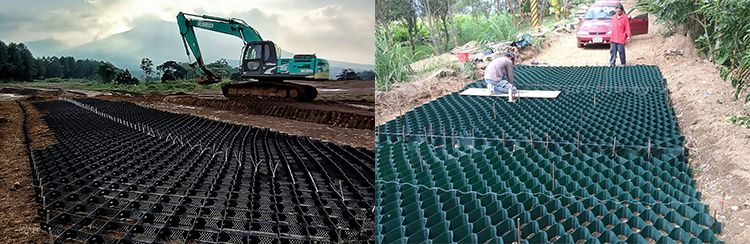
We will present a comparison between the polymer stabilization of soil method and traditional soil stabilization methods:
Stabilizing soil using sand stabilization polymers is a modern development used for high-efficiency soil stabilization, improving soil resistance to water and erosion. This technique is practical and less harmful to the environment. Although the cost of polymers is higher than traditional materials, they are more practical for the soil.
Traditional soil stabilization involves using lime and cement to increase its strength and suitability. This method works by binding soil particles to increase their resistance to water and erosion and its cost is not prohibitive.
Environmental Benefits of Polymer Soil Stabilization
The environmental benefits of polymer soil stabilization are as follows:
- A polymer soil binder is used to stabilize the soil, maintain its fertility and reduce erosion.
- Increased soil fertility which helps support plant growth and improve production.
- Polymers help create an ecological balance in the soil to increase its strength and cohesion.
- By reducing soil erosion, it prevents soil from leaking into lakes and rivers, reducing the risk of pollution and sedimentation.
- Reduced gas emissions in desert areas to lessen gas emissions into the air, improve air quality and reduce health damage.
- Providing innovative solutions instead of resorting to traditional soil stabilization methods that can be harmful to the environment and rely on non-renewable materials.
- In some cases, using polymer technology can be cheaper and more effective than using traditional methods.
How to Choose the Appropriate Polymer Type for Soil Stabilization
Several factors help you choose the appropriate polymer type for soil stabilization. These factors include:
- The soil type, as each soil type has a suitable polymer.
- Polymers are chosen according to climatic changes such as humidity and temperature.
- Polymer with good viscosity must be chosen and it must be compatible with the soil type.
- Ensuring the selection of a polymer resistant to changes and characterized by physical and chemical stability.
WHC offers a diverse range of polymer soil stabilization products to increase soil strength and cohesion. This technology transforms loose soil into a solid surface to ensure it does not erode and to increase soil stability.
You should contact the WHC company which has extensive experience in the field of polymer soil stabilization and offers many innovative solutions to strengthen the soil and increase its thickness using the latest advanced technologies.
FAQs
What polymers are used as stabilizers?
The polymers used as stabilizers are High-Density Polyethylene HDPE, Low-Density Polyethylene LDPE, Polystyrene, Polypropylene and Polyvinyl Chloride.
How are polymers stabilized?
Polymers are stabilized by adding certain chemicals that slow down photochemical processes which cause polymer degradation, such as photolysis and oxidation.
How are polymers stabilized?
Polymers are stabilized by adding certain chemicals that slow down photochemical processes which cause polymer degradation, such as photolysis and oxidation.
What are the three types of soil stabilization?
The three types of soil stabilization are: Biological soil stabilization by using grasses and plants to strengthen and stabilize the soil. Physical soil stabilization by using mechanical materials to stabilize the soil. Chemical soil stabilization by using chemical substances to improve soil properties.