
In construction and geotechnical engineering, subgrade conditions often make or break the integrity of infrastructure. One of the most efficient solutions to this challenge is Mixed-in-Place Soil Stabilization.
This in situ process strengthens native soils by combining them with binding agents, directly on-site. It’s a sustainable, economical, and performance-driven method that’s reshaping how engineers build roads, foundations, and transport networks.
The Core of Mixed-in-Place Soil Stabilization Services
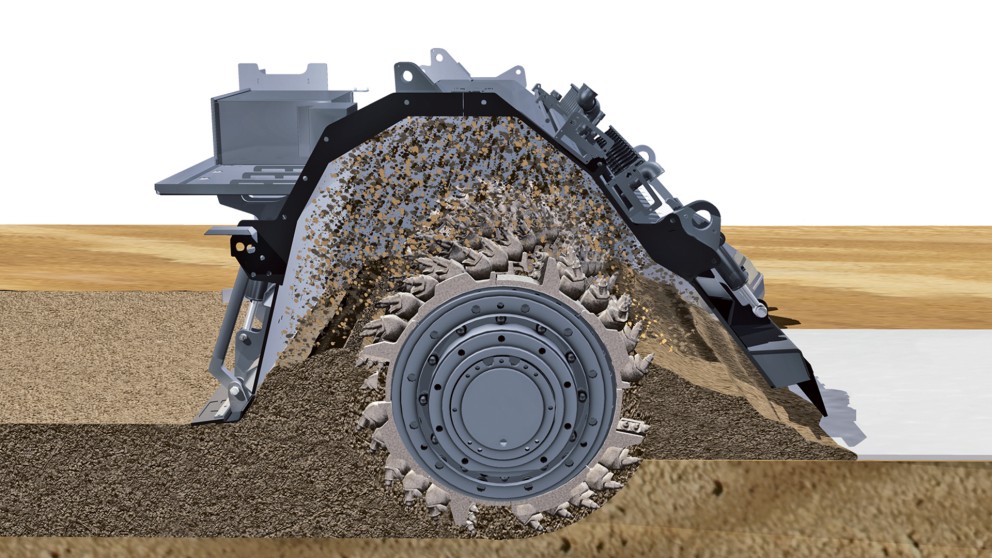
Mixed-in-Place Soil Stabilization Services involve modifying weak soils by mixing them with stabilizing agents such as cement, lime, fly ash, or polymers at their existing location. This eliminates the need to remove and replace unsuitable soil, cutting costs and reducing environmental impact.
This method fits squarely under the broader family of material mixing processes, with applications ranging from infrastructure development to environmental remediation. In comparison to full soil replacement or off-site treatment, this in-place approach saves time, reduces transportation, and allows construction to proceed with greater speed and control.
Where Rock Solid Stabilization Begins: Key Applications
The versatility of MIP stabilization makes it ideal for a wide variety of engineering and construction scenarios. Its benefits are not only mechanical but also economic and ecological.
Road Construction and Highway Development
Road projects often suffer from soft subgrades or unstable soils. By improving these weak areas in place, engineers can ensure rock solid stabilization that provides a durable subbase for pavement. This helps prevent rutting, cracking, and premature degradation.
Railways and Embankment Support
In rail infrastructure, track stability is paramount. Mixed-in-place stabilization creates firm, reliable support for rails, especially in marshy or flood-prone regions. It also prevents embankment failure by increasing soil cohesion and shear strength.
Foundations for Industrial Structures
Manufacturing plants, warehouses, and power stations require steady foundations that can support dynamic and static loads. MIP stabilization ensures uniform support and mitigates risks of differential settlement.
Airport Runways
For runways handling the high stresses of aircraft traffic, MIP techniques offer a method to improve load distribution without extensive excavation. The stabilized ground offers high resistance to deformation and settlement.
Contaminated or Reclaimed Sites
Brownfields and reclaimed land often contain inconsistent or weak soils. MIP stabilization can improve the structural properties of such soils and encapsulate contaminants, aligning with environmental regulations.
Deep Soil Mixing vs. Mixed-in-Place Soil Stabilization Services
While both Deep Soil Mixing (DSM) and Mixed-in-Place Soil Stabilization Services to improve soil strength through in situ treatment, they differ in scale and application.
- Deep Soil Mixing typically involves large augers and is used for treating soils at depths of up to 30 meters or more. It’s common in large-scale projects like dams, levees, and port facilities.
- MIP Soil Stabilization, in contrast, often focuses on shallower depths (up to 3 meters) and is applied with surface-level reclaimer machines. It’s more suited to roadbeds, parking lots, shallow foundations, and industrial flooring.
Equipment and Material Mixing Processes in MIP Projects
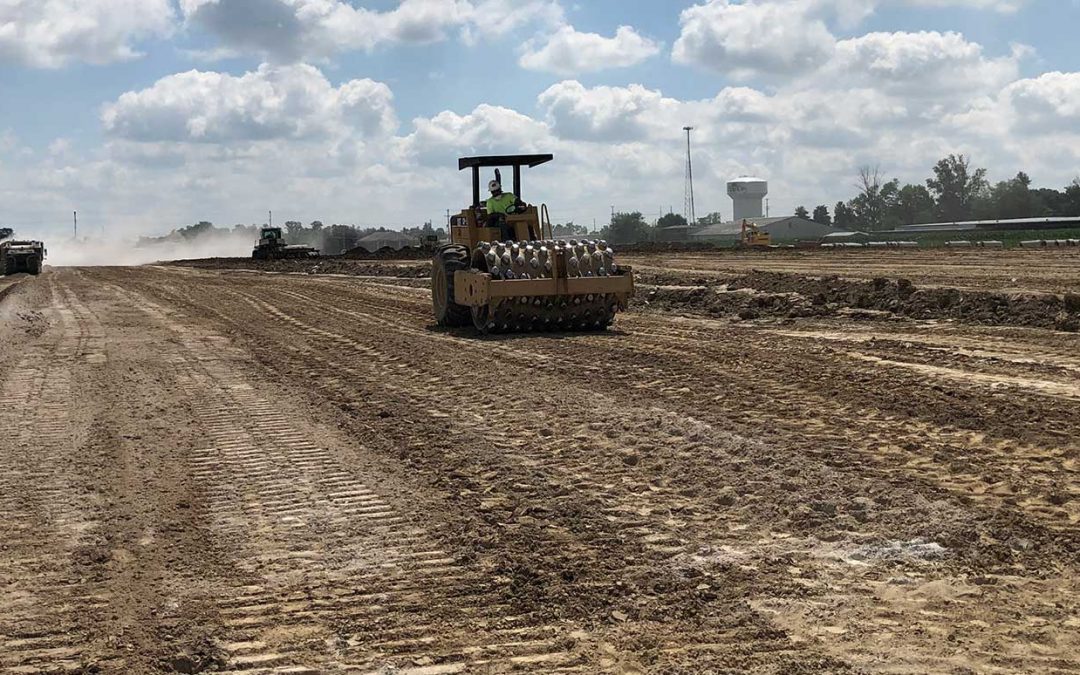
The success of mixed-in-place soil stabilization heavily depends on the tools and procedures used for the material mixing processes.
These include:
- Reclaimers or Soil Stabilizers: These powerful machines are equipped with rotating drums and mixing blades that break up the soil and mix in the stabilizing agents to the desired depth.
- Spreader Trucks: These vehicles evenly distribute powdered additives like lime or cement across the surface before mixing begins.
- Water Trucks: Moisture is critical for certain chemical reactions, particularly with lime and cement. Water trucks ensure optimal hydration.
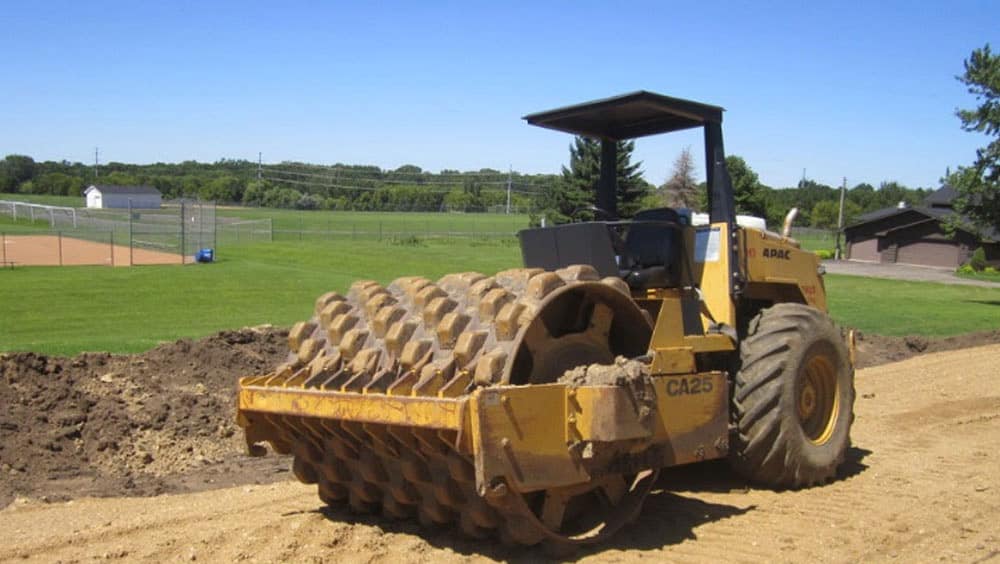
- Rollers and Compactors: After mixing, these machines compact the treated soil to achieve required density and eliminate air pockets.
Precision in mixing is essential. Poorly mixed soil can result in weak spots or uneven curing. Many modern machines now come with GPS and real-time monitoring for quality assurance.
Mixed-in-Place Soil Stabilization Services: A Step-by-Step Breakdown
To better understand how Mixed-in-Place Soil Stabilization Services work, let’s walk through the standard process:
1. Soil Analysis and Site Assessment
Engineers begin by sampling the soil to determine its characteristics: particle size, moisture content, Atterberg limits, organic content, and plasticity. These properties influence the selection of stabilizing agents.
2. Choosing the Right Additives
Additives are selected based on soil chemistry:
- Lime: Works best for clay soils by reducing plasticity and increasing workability.
- Cement: Ideal for sandy or silty soils, adding compressive strength.
- Fly Ash or Slag: Often used with lime or cement to enhance long-term strength.
- Polymers: Used for special cases requiring waterproofing or chemical resistance.
3. Mixing and Stabilization
Additives are spread and then thoroughly mixed with the native soil using stabilizer machines. Depth and thoroughness of mixing are key to the effectiveness of the treatment.
4. Compaction and Curing
After mixing, the soil is compacted with vibro-compaction to reduce voids and achieve the desired load-bearing properties. Curing time depends on the binder used, ranging from a few days to several weeks.
5. Testing and Quality Control
Engineers perform field tests (e.g., unconfined compressive strength tests, moisture content, and density testing) to ensure that stabilization meets the project’s design requirements.
Advantages of Mixed-in-Place Soil Stabilization
Eco-Friendly Construction
MIP stabilization significantly reduces the need for hauling soil or importing aggregates. It also allows for the reuse of on-site materials, aligning with sustainable construction practices.
Cost-Effective Solutions
Eliminating soil removal, transportation, and replacement lowers both direct and indirect project costs. Fewer truck movements also reduce fuel consumption and road wear.
Durable and Predictable Outcomes
Properly stabilized soil offers consistent, predictable performance under loading. The treated ground resists shrinkage, swelling, and erosion—critical qualities for long-term structural integrity.
Speed and Efficiency
Modern stabilization equipment can treat thousands of square meters per day, dramatically speeding up construction schedules.
Limitations and Considerations
Despite its benefits, MIP stabilization does have certain limitations:
- Weather Conditions: Rain or freezing temperatures can interfere with mixing and curing processes.
- Additive Logistics: Supplying consistent quantities of additives—especially in remote areas can be challenging.
- Operator Skill Level: Precision is vital. Untrained operators can misapply additives or mix unevenly, leading to weak sections.
- Environmental Regulations: Use of chemical binders may be restricted in some regions, particularly near water bodies.
Real-World Success Stories
Texas Highway Rehabilitation
A stretch of failing highway was stabilized using lime and cement in-place. This solution cut the reconstruction cost by 35% and extended pavement life by over two decades.
Industrial Park in Southeast Asia
A logistics hub needed to be built on expansive clay. Engineers chose in-place lime stabilization to create a stable platform. The treated soil reached load-bearing capacity within 10 days.
UK Airport Expansion
Runway extension required stabilization of loose granular soils. MIP with a cement-fly ash blend provided fast curing and minimized downtime for airport operations.
Future of Mixed-in-Place Soil Stabilization Services

As technology evolves, so does the future potential of MIP techniques:
- Smart Stabilization Equipment: Machines with onboard sensors and AI-assisted controls ensure optimal blending and compaction.
- Green Additives: More sustainable options like bioenzymes and recycled waste materials are entering the market.
- Hybrid Methods: Combining Deep Soil Mixing with MIP processes can provide tailored solutions for variable site conditions.
- Real-Time Monitoring: New systems will allow for ongoing strength and moisture tracking in the stabilized layers.
These innovations promise to enhance the effectiveness and adoption of MIP stabilization in both developed and emerging economies.
Why Mixed-in-Place Soil Stabilization Services Are Worth Considering
If you’re managing a construction project with problematic soil, Mixed-in-Place Soil Stabilization Services offer a practical, scalable, and sustainable solution. Whether you’re building a road, foundation, or industrial platform, this technique minimizes disruption while delivering rock solid stabilization.
By using advanced material mixing processes and tailored additives, MIP provides consistent quality, reduces environmental impact, and accelerates project timelines. It’s a proven method that continues to evolve with modern demands.
Conclusion
Mixed-in-Place Soil Stabilization Services represent a paradigm shift in ground engineering. Instead of removing and replacing poor soils, we now have the tools and technology to improve them where they are efficiently, affordably, and sustainably.
From highways to runways, and foundations to reclaimed lands, MIP stabilization is becoming a cornerstone of modern infrastructure development.
With the integration of innovative equipment, smart materials, and precise engineering, this approach ensures that the ground beneath our structures isn’t just sufficient it’s engineered for excellence.
Frequently Asked Questions (FAQs) About Mixed-in-Place Soil Stabilization Services
What is the main difference between Mixed-in-Place Soil Stabilization and traditional soil replacement?
Mixed-in-Place (MIP) Soil Stabilization treats and strengthens the existing soil on-site using additives like lime or cement, while traditional soil replacement involves excavating weak soil and replacing it with imported material. MIP is generally more cost-effective, faster, and environmentally friendly since it reduces the need for excavation and transportation.
How deep can the soil be treated using MIP stabilization methods?
Typical treatment depths for MIP soil stabilization range from 200 mm to 500 mm (8 to 20 inches), but with specialized equipment, it can reach depths of 1 to 2 meters (3 to 6 feet). For deeper treatment, techniques like Deep Soil Mixing are more appropriate.
What types of soil are suitable for Mixed-in-Place Soil Stabilization?
Most soil types can be improved using MIP stabilization, including: Clay soils (well-suited for lime stabilization) Silty soils (responsive to lime or cement) Granular soils (can be treated with cement or chemical binders) However, soils with high organic content or excessive moisture may require pretreatment or may not be suitable without significant modification.
How long does the stabilized soil need to cure before construction can continue?
Curing times depend on the stabilizing agent and environmental conditions: Lime-treated soils typically require 5–10 days. Cement-treated soils may require 3–7 days. High humidity or low temperatures can extend curing time.
Is Mixed-in-Place stabilization environmentally safe?
Yes, when properly designed and executed. MIP stabilization reduces the environmental impact of construction by: Minimizing excavation and transportation. Reusing on-site materials. Reducing carbon footprint from truck trips and aggregate production.
What quality control measures are taken during the MIP stabilization process?
Quality control includes: Pre-project testing of soil and additives. On-site verification of mixing depth, moisture content, and additive proportions. Field and lab testing such as unconfined compressive strength (UCS) and Proctor density tests. Monitoring during curing to ensure conditions meet specifications.
Can Mixed-in-Place Soil Stabilization be used in rainy or cold climates?
It can, but with limitations. Wet or frozen ground can hinder proper mixing and reduce the effectiveness of stabilization agents. Project timing and weather forecasts should be considered during planning. In cold conditions, special curing practices or additives may be required to ensure proper soil performance.