
Soil is a strong foundation for any building as it plays a fundamental role in determining its strength and stability. For this reason, a large number of techniques have emerged aimed at strengthening and improving the properties of weak soil before starting any construction process. Among these effective methods is jet grouting soil improvement, which is characterized by its ability to change soil properties from within without the need for deep excavation or layer removal. This makes it suitable for projects in specific areas that require rapid completion while maintaining high quality.
What is Jet Grouting Soil Improvement?
Jet grouting soil improvement is one of the techniques used to improve weak soil. It relies on pumping a mixture of cement, water and sometimes additional materials through special pipes into the soil under specific pressure. This process results in the injected material mixing with the original soil to form a new material that consolidates with the soil.
It is also known as jet grouting columns, which are cylindrical columns extending to various depths underground to improve soil quality and prevent settlement or collapse. The efficiency of this technique depends on the soil type, injection pressure and the specifications of the mixture used. All these factors are precisely determined before starting implementation.
When Do We Use Jet Grouting Ground Improvement?

Jet grouting soil improvement technology is used in these cases:
- When the soil is weak and cannot bear the expected loads.
- When it is difficult to implement traditional soil methods such as excavation or replacement.
- It is also ideal in areas containing existing structures adjacent to the site, where the soil under buildings can be improved without needing to remove them.
- In projects that require soil strengthening to resist earthquakes or ground tremors.
- In sites with high groundwater levels.
- It is also the most suitable option for repairing damaged building foundations.
- When implementing projects or structural additions next to old buildings.
Steps for Implementing Jet Grouting
The steps for jet grouting procedure are:
- Jet grouting contractors begin with conducting a detailed geological study of the soil.
- Afterward, a hole is drilled through which the injection pipe will be inserted.
- A specialized jet grouting machine is used to pump the mixture at a specific pressure into the soil to strengthen and improve the soil.
- This process is repeated vertically to create interconnected columns of cementitious material within the soil.
- The columns are inspected, and their uniformity in size and strength is ensured to achieve the best results.
Types of Jet Grouting Systems

There is more than one system for implementing jet grouting, and the choice of system depends on the nature of the soil and the project. The first system is the single-fluid system, where only grout is jetted. The second system is the double-fluid system, where air is added to the mixture to increase strength. The third system is the triple-fluid system, which combines air, water, and grout to achieve maximum efficiency.
Each system is chosen based on a precise engineering study that considers the required depth, diameter, and appropriate pressure, in addition to the soil properties and its moisture content.
Advantages and Disadvantages of Jet Grouting
Although jet grouting soil improvement technology is advanced, it has some drawbacks or points that must be considered before making a final decision.
Among the most prominent jet grouting advantages and disadvantages is that it significantly improves the soil without affecting surrounding buildings and structures. The technique can be implemented in narrow spaces, and it does not require the removal of soil layers. However, implementing this technique requires specialized equipment and considerable expertise. Additionally, its cost is higher than some other methods, and the quality of the columns can be affected if the pressure is not controlled precisely.
Difference Between Jet Grouting and Other Soil Improvement Methods
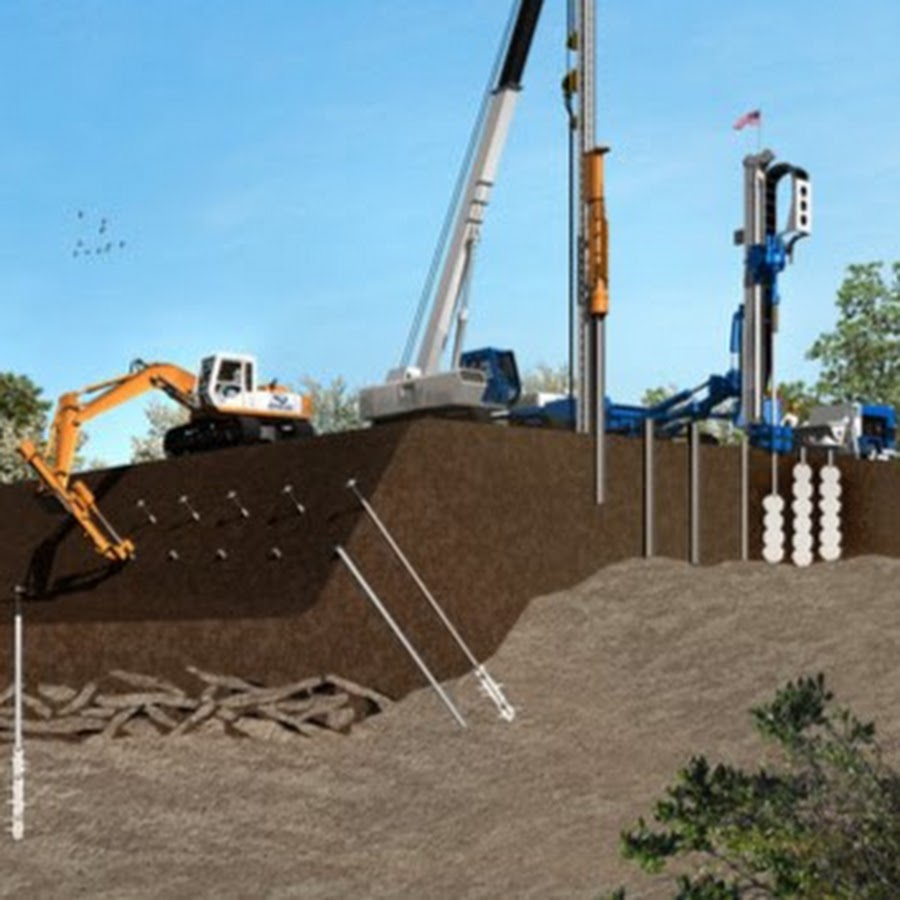
Jet grouting differs from other traditional methods used for soil improvement, such as compaction grouting, in terms of method and results. Traditional methods rely on redistributing the soil, removing new layers, or replacing them with other layers, whereas jet grouting is done from within without affecting existing buildings.
Another difference is that jet grouting ground improvement techniques do not cause any vibrations that affect adjacent buildings, as is the case with some other improvement techniques. It can also be implemented at various depths with great precision without requiring large work areas, in addition to the possibility of incorporating different components into the soil as needed.
Cost of Implementing Jet Grouting in Projects
The cost of jet grouting method soil improvement is higher than some other soil improvement methods, but it is characterized by high precision and quality of execution, which ensures an excellent final result. In general, the cost depends on several factors, including the project area, column depth, and the amount of grout used, as well as the choice of the appropriate system.
Also, choosing jet grouting implementation companies with high expertise contributes to avoiding errors and thus may increase the price. Generally, many prefer to use jet grouting in sites where traditional methods or techniques are difficult to use, or in cases requiring high strength.
Conclusion
Jet grouting soil improvement technology is one of the most important modern engineering techniques that has proven its efficiency in construction and infrastructure projects, especially in areas known for their weak soil. This technology provides an effective solution for strengthening soil without the need for major site modifications, excavation, or removal of soil layers.
FAQs
Can jet grouting be used in sandy soil?
Yes, jet grouting soil improvement technology can be used in sandy soil, but this requires adjusting the mixture composition and increasing the pressure used to ensure the material consolidates with the soil. With precise execution, excellent results can be obtained even in cohesionless sand.
How long does it take to implement jet grouting in a medium-sized site?
The time required depends on the number of columns needed and the depth of each column. However, on average, implementing this method may take from one to three weeks. The duration also depends on site preparation, the number of workers, and the efficiency of the machines used. It is preferable to contract with jet grouting implementation companies to ensure the project is delivered on time without any delay.