
Ground is considered the foundation upon which any construction project is built and its properties directly affect the stability and safety of various structures. With the increase in urban projects in different regions, ground faces multiple challenges such as pollution, high moisture levels and reduced bearing capacity. Therefore, ground improvement solutions include a range of techniques that are used before construction operations to address ground problems and enhance its bearing strength. In this article, we will talk about different ground improvement solutions and some chemical methods that are used to improve it.
What is ground improvement?

Ground Improvement Solutions are technologies that aim to strengthen the ground and enhance its strength before construction operations to support the building foundations and increase its lifespan. These solutions also reduce the risks of collapses, cracks and fissures that may occur in the ground after construction operations, especially in large projects. This includes analyzing ground properties to determine its bearing capacity, either in the field or in the laboratory. There are many methods that are used to enhance ground performance and support construction which contributes to a clearer understanding of the concept of ground improvement.
Ground Improvement Solutions
There are many ground improvement solutions that are used to improve the ground before construction with the aim of increasing its durability and strength to increase its ability to bear loads. Mechanical stabilization can be used, which is considered one of the most famous methods of ground improvement and often involves applying techniques such as compaction or preloading using weights to increase its density.
Chemical stabilization can also be used which involves using some chemical substances that contribute significantly to improving ground properties, such as adding polymers and other materials. Among the most important materials that are added to reinforce the ground are cement and lime. The optimal solutions for ground improvement vary from place to place depending on the ground type and the required construction specifications.
Ground improvement solutions in Al-Ahsa

There are different types of ground improvement services that are used in the city of Al-Ahsa, especially in large construction, commercial and industrial projects. The choice of each type of these services depends on many factors such as the available budget, the type of existing ground and the project specifications. Among the most important services that are used for ground improvement are the following:
- Using vibro-compaction to densify ground particles and increase its cohesion, stiffness and strength.
- Compaction is considered one of the most important mechanical methods that is used to increase ground density which leads to reducing its porosity and thus increasing its strength.
- Ground replacement involves replacing weak ground with another type that is stronger and more rigid.
- Chemical additives where some chemical substances are added to the ground, which leads to improving its properties.
- Ground freezing is one of the modern methods in which the ground is frozen, turning the water inside it into ice, which leads to increasing its bearing capacity temporarily or permanently depending on the application.
- Some specialized materials are used to inject weak ground to improve its properties and increase its strength.
Chemical methods for ground improvement
There are chemical methods for ground improvement that are used by ground improvement contractors. Among the most important of these methods are:
- Using lime or cement: They are mixed into the ground, which leads to modifying its properties. The appropriate amount of lime and cement depends on the ground quality and type.
- Chlorides: These are among the most common options for chemical ground stabilization. Different types of chlorides are used, such as magnesium chloride and calcium chloride. They are considered cost-effective methods and among the oldest in use.
- Polymers: Which significantly enhance the chemical stability of the ground and prevent water seepage into it, because the presence of water under the foundations may cause corrosion and damage to buildings. These materials work to bind ground particles together like adhesive, which enhances its stability, strength and bearing capacity.
CMC method for ground improvement
This technique is used in soft and loose ground and is considered one of the best Ground improvement solutions that is used, especially before starting large projects. It has proven its effectiveness in many projects and used to enhance the ground’s bearing capacity and reduce the amount of expected settlement. This ground improvement method is implemented by using a special drilling tool that introduces solid materials or cementitious grout which contributes to strengthening the ground, through a process characterized by limited ground displacement. This is done by injecting a special cementitious grout or concrete under low pressure, which forms a rigid column with a diameter ranging between 250 to 500 mm.
Implementation steps for ground improvement
There are some steps that must be followed to improve the ground before construction operations, which are:
- Studying the requirements and specifications of the engineering project.
- Determining the properties and type of ground at the site to determine the appropriate treatment method.
- Conducting the necessary field and laboratory tests to determine the ground’s stiffness, bearing capacity and other properties.
- Choosing the most suitable method from the available ground treatment methods, whether chemical, mechanical, or others.
Equipment used for ground improvement
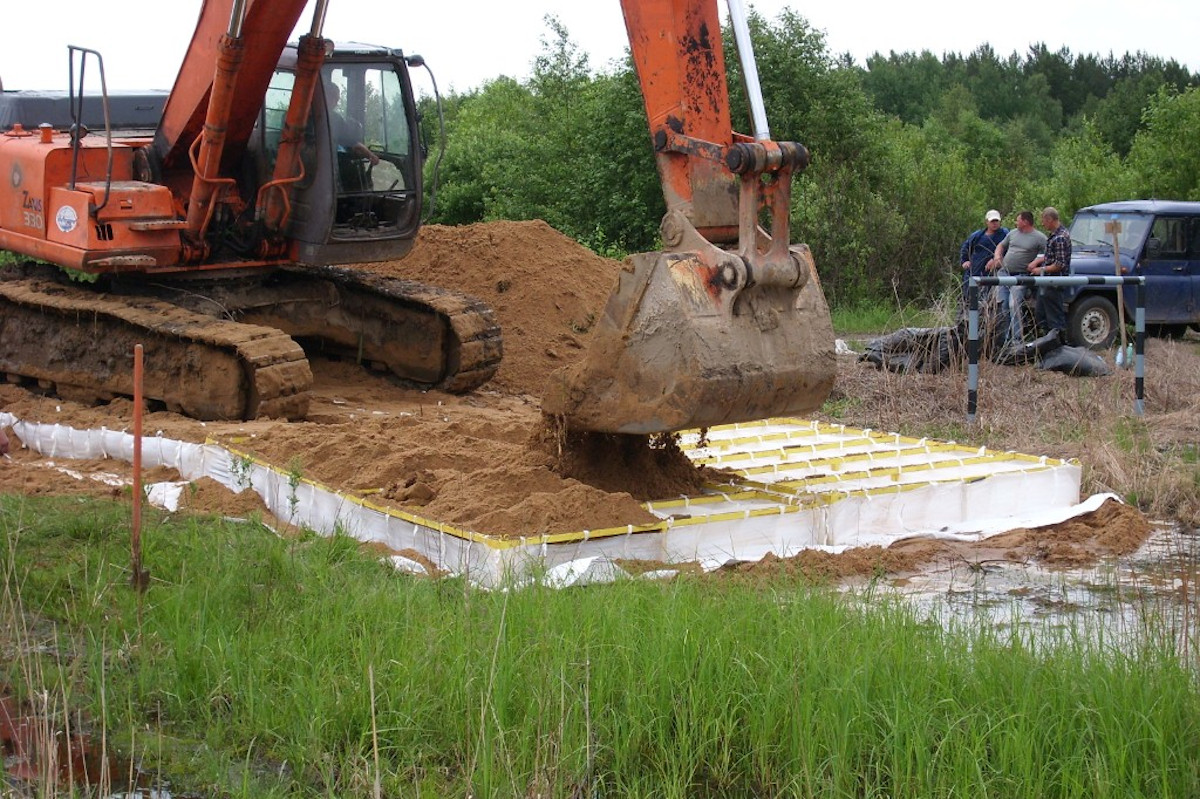
The tools and equipment that are used for ground improvement vary from place to place depending on the ground type and the appropriate method for its treatment. These tools often include a ground penetrometer, moisture measuring devices, a nuclear density gauge, a sieve analysis device, a Proctor compaction apparatus and triaxial testing devices, in addition to devices that are used for mixing ground with certain materials and injection equipment in cases of applying the ground injection technique. The equipment can also include excavators to remove surface ground or to carry out replacement operations.
Benefits of ground improvement in Al-Ahsa

Ground improvement helps significantly in supporting the construction and ensuring its stability and safety, because the ground is the primary base that carries the building loads. The stronger it is, the longer the building’s lifespan. Ground improvement helps significantly in reducing its erosion or settlement. It also helps in reducing the effects of moisture that negatively affects buildings, which may lead to their damage or even collapse over time.
Therefore, ground improvement ensures the safety of the ground itself and the safety of the building and its users. This is why ground improvement solutions are considered one of the most important considerations that must be taken into account before construction operations.
When do you need ground improvement in Al-Ahsa?
It is preferable to resort to ground improvement solutions in many cases, especially when building large projects and buildings with heavy loads and when constructing roads and bridges. Improvement techniques are also used in cases of weak ground, such as sandy ground because it may be non-cohesive or compressible. They are also used in clayey ground because it may contain a high moisture content and be compressible or expansive, which negatively affects the stability of structures.
They are also used in cases of low-density ground and non-homogeneous ground, with the aim of giving the ground the necessary capacity and durability to withstand the project loads. WHC company is considered one of the best companies that can be relied upon to significantly improve ground before construction operations.
Ground improvement solutions are considered among the most important methods that are used to increase the stiffness and strength of the ground before construction operations which leads to effectively supporting the entire building. WHC company is considered one of the most important companies that can be relied upon to implement appropriate ground improvement solutions before construction operations.
FAQs
What chemicals are used in soil compaction?
Lime and cement are considered the most important chemical materials that are used to stabilize ground. Some other materials such as polymers and chlorides can also be used for this purpose.
What is the common ground PDE?
It is one of the important methods that is used for ground improvement, especially ground with weak resistance, with the aim of enhancing ground stability and ensuring its safety. Its safety is achieved by using a set of modern tools and techniques to improve it.
What are ground reinforcement methods?
These are the methods by which appropriate reinforcement is carried out for the ground or existing foundations. These methods vary according to the ground type and the nature of the construction and include techniques such as tying two or more foundations together, increasing the area of isolated footings and converting isolated footings into a full mat foundation. They may also include using ground improvement techniques themselves to support existing foundations.