
Soil is the foundation of every structure. Whether it’s a highway, industrial facility, or high-rise, unstable soil can jeopardize safety, cost, and timeline. That’s why Ground Improvement Solutions for Construction have become a fundamental part of civil engineering. These solutions involve a range of techniques that modify or enhance soil properties to support design loads safely.
In this article, we explore the most effective Ground Improvement Methods, innovations in Ground Improvement Engineering, and frequently asked questions for professionals seeking reliable, long-term solutions.
What are Ground Improvement Solutions for Construction?

Ground Improvement Solutions for Construction are engineered techniques used to strengthen soil and control deformation. These methods alter the mechanical and hydraulic behavior of soils, making them suitable for construction loads that would otherwise cause excessive settlement or failure.
Common objectives include:
- Enhancing shear strength
- Increasing bearing capacity
- Reducing permeability and compressibility
- Mitigating liquefaction risks in seismic zones
From soft clay to loose sands, each soil type presents unique challenges. Thus, engineers must select the appropriate Ground Improvement Methods based on soil investigation reports, groundwater conditions, and structural demands.
The Role of Ground Improvement in Project Success
A weak foundation can lead to disastrous consequences, from differential settlement to tilting and even collapse. Ground Improvement Solutions for Construction ensure that soil provides adequate support, drainage, and stability.
Key project benefits:
- Avoidance of deep foundations (saving cost)
- Shorter construction durations
- Enhanced safety for infrastructure in flood-prone or earthquake regions
- Increased asset life with reduced maintenance
In urban environments where space and time are limited, these solutions are indispensable for high-stakes construction.
Comprehensive Overview of Ground Improvement Methods
A wide range of Ground Improvement Methods exists to solve diverse soil problems. These methods fall into mechanical, hydraulic, chemical, and inclusions-based techniques. Below, we dive into the most widely used approaches.
Mechanical Compaction Techniques
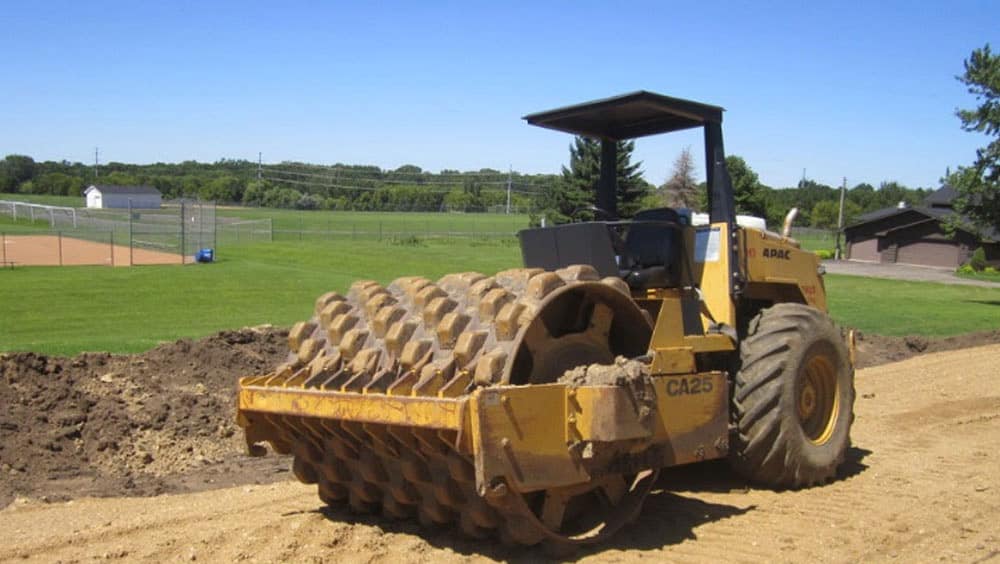
Mechanical compaction uses force and vibration to densify soil particles. Rollers, tampers, and vibratory plates compact shallow soil layers, making this ideal for roadbeds, airfields, and foundations.
Types:
- Static compaction: Using heavy rollers
- Dynamic compaction: Dropping weights from height
- Impact rollers: Applying pulsating force
Advantages:
- Cost-efficient for large areas
- Immediate results
- Environmentally safe
Limitations:
- Limited to 3–5 m depth
- Requires dry or slightly moist soil
For construction on reclaimed land, mechanical compaction is a primary method in Ground Improvement Solutions for Construction.
Preloading with Vertical Drains

Preloading places temporary weight over a construction site, accelerating soil consolidation and reducing post-construction settlement. Vertical drains, typically made of synthetic materials, help dissipate pore water pressure.
Used in:
- Port terminals
- Embankments
- Airports on soft clay
Engineering principles:
- Load = future structural weight + surcharge
- Pore water is expelled through vertical drains
- Final strength is gained before permanent loads are applied
This method is often chosen in Ground Improvement Engineering for large-scale public infrastructure projects in deltaic regions.
Vibro-Compaction and Vibro-Replacement
Both techniques use vibratory probes but apply to different soil types.
- Vibro-compaction targets granular soils, increasing density by shaking particles into closer contact.
- Vibro-replacement installs stone columns into soft soils, offering reinforcement and drainage.
Vibro techniques are used for:
- Industrial tank pads
- Oil refinery foundations
- Port projects
As part of Ground Improvement Solutions for Construction, vibro methods reduce liquefaction potential and improve load distribution under dynamic loads.
Soil Stabilization with Binders
Soil stabilization chemically alters soil properties. Common binders include:
- Lime: For clayey soils; reduces plasticity and improves workability
- Cement: Increases strength in both granular and cohesive soils
- Fly ash or slag: Used as supplementary materials
Benefits:
- Fast improvement in bearing capacity
- Reduced shrink/swell behavior
- Improved freeze-thaw resistance
In Ground Improvement Engineering, stabilization is a preferred method for subgrade preparation in highways, especially in tropical and expansive soil zones.
Grouting Systems and Jet Grouting

Grouting involves injecting material into the soil to increase strength, reduce permeability, or fill voids.
There are various types:
- Permeation grouting: For sands; low-pressure injection
- Compaction grouting: Displaces and densifies soil
- Jet grouting: High-pressure slurry jets create in-situ soil-cement columns
Applications:
- Tunnel linings
- Foundation repairs
- Cutoff walls for dams
Grouting plays a key role in complex urban projects where conventional excavation isn’t feasible. As part of advanced Ground Improvement Solutions for Construction, grouting ensures structural stability in problematic subsurface conditions.
Stone Columns and Dynamic Replacement
Stone columns are vertical inclusions of gravel or crushed stone, constructed using a vibro-flot. They increase the load-bearing capacity of soft, compressible soils.
Dynamic replacement, a variation of dynamic compaction, drives granular material deep into the soil using a falling weight.
Used in:
- Warehouse foundations
- Liquefaction-prone zones
- Areas with organic or peaty soils
These methods are cost-effective and environmentally sustainable, making them key components in Ground Improvement Solutions for Construction.
Geosynthetics in Ground Improvement Engineering
Geosynthetics are synthetic materials used to reinforce, filter, drain, or separate soil layers.
Types include:
- Geotextiles: Drainage and filtration
- Geogrids: Reinforcement for retaining walls
- Geomembranes: Waterproofing liners
Benefits:
- Reduce required excavation
- Long-lasting and corrosion-resistant
- Ideal for environmentally sensitive areas
In modern Ground Improvement Engineering, geosynthetics are crucial for sustainable, low-maintenance construction.
Selection Criteria for Methods of Ground Improvement
Not all methods suit all soils or projects. Here are key factors engineers consider:
| Factor | Influence on Selection |
| Soil Type | Determines compatibility (clay vs sand) |
| Groundwater Level | Affects method feasibility (e.g., grouting) |
| Load Requirements | Heavier loads need deeper/stronger methods |
| Construction Timeline | Fast-track projects may need preloading |
| Environmental Regulations | Some chemicals may be restricted |
| Budget Constraints | Mechanical methods often cost less |
Ultimately, choosing the right Ground Improvement Solutions for Construction ensures project viability and longevity.
Innovations in Ground Improvement Solutions
The industry is shifting toward smarter and greener technologies:
- Microbial Induced Calcite Precipitation (MICP): Uses bacteria to produce natural cement
- Electro-osmosis: An electric field drives water from clay
- Fiber Reinforcement: Natural or synthetic fibers increase soil ductility
Innovations like these mark the future of Ground Improvement Engineering, making it more sustainable, effective, and adaptable.
Real-World Examples of Ground Improvement in Action
Example 1: Hong Kong Airport Runway Expansion
The reclaimed land required stone columns and surcharging for safe aircraft loading.
Example 2: Burj Khalifa Foundation
Grouting and piling were used in tandem to enhance weak silty sands.
Example 3: Panama Canal Expansion
Jet grouting stabilized excavation walls and minimized seepage.
In all these projects, Ground Improvement Solutions for Construction were critical to project feasibility.
Conclusion: Why Invest in Ground Improvement Solutions for Construction?
In the face of growing urbanization, climate change, and increasing structural demands, Ground Improvement Solutions for Construction offer an essential safety net. Whether addressing liquefaction risks, stabilizing slopes, or speeding up timelines, these solutions ensure that structures stand firm on stable, engineered ground.
From soil stabilization in highways to grouting in urban tunnels, and stone columns in industrial parks, the tools and techniques of Ground Improvement Engineering are indispensable. With innovations on the horizon and an emphasis on sustainability, now is the time to invest in smarter foundations.
Remember, a solid structure begins with solid ground and that starts with the right Ground Improvement Solutions for Construction.
FAQs – Ground Improvement Methods Explained
How long do ground improvement solutions last?
When properly designed, they can last the entire lifespan of the structure (50+ years).
Can ground improvement be used for retrofitting old buildings?
Yes. Techniques like compaction grouting and soil stabilization are ideal for retrofits.
How do I estimate the cost of ground improvement?
Costs depend on the method, soil conditions, and depth. Mechanical compaction costs less than grouting.
Are there eco-friendly options available?
Yes. Methods like MICP and geosynthetics offer low carbon footprints.
Is a geotechnical survey necessary before ground improvement?
Absolutely. Soil testing is vital for determining the correct Ground Improvement Solutions for Construction.