
Soil is considered one of the most important basic elements that significantly affect the safety and durability of structures. Therefore, before starting any large construction project, it becomes necessary to evaluate the soil properties because they play a vital role in the stability of foundations and the structure as a whole. Many projects face challenges related to soil quality such as weak bearing capacity, susceptibility to compression or swelling, liquefaction, or erosion, which necessitates seeking the expertise and solutions of soil experts. In this article, we will discuss some expert ground improvement solutions before construction and the importance of this improvement in engineering projects.
What are expert ground improvement solutions?
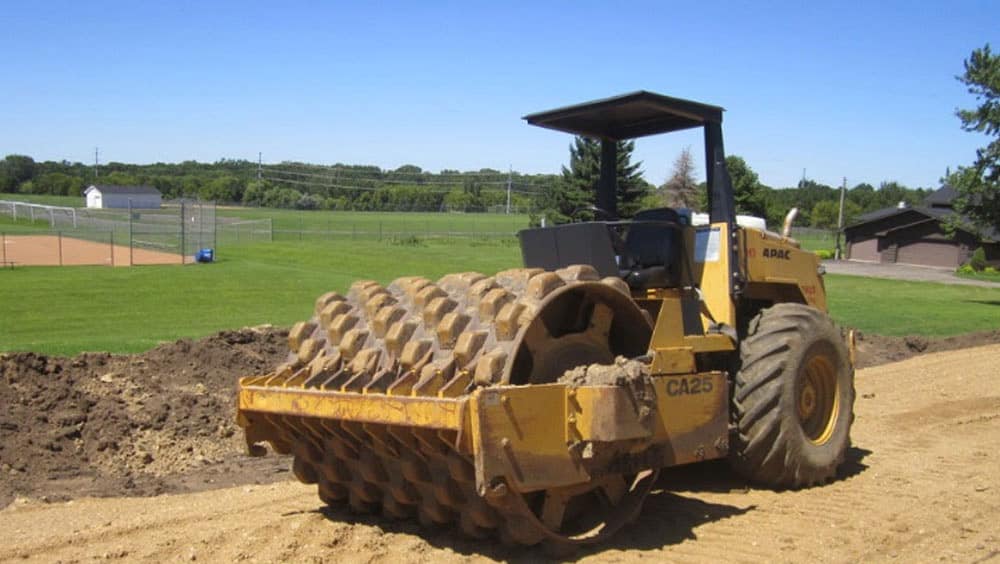
Expert ground improvement solutions consist of a set of engineering techniques and practices that aim to modify soil properties to increase its strength and durability and reduce its susceptibility to compression or swelling. This is done using various means, some of which are mechanical, chemical, hydraulic, or thermal, and they are applied by specialized work teams under engineering supervision to ensure the safety of the construction and increase its strength and sustainability.
The need for soil improvement increases in large projects such as dams, airports, high-rise buildings, and the construction of roads and bridges, especially when dealing with soil types known to have problems such as loose sandy soils, weak or expansive clayey soils, or those with high moisture content. Selecting and applying the appropriate improvement technique requires a deep understanding of soil mechanics and geotechnics.
Seeking expert ground improvement solutions is considered a fundamental step to ensure the safety and stability of structures in the long term.
Soil improvement significantly helps in increasing bearing capacity, reducing settlement, controlling permeability and moisture, and increasing slope stability. Consequently, this leads to preventing erosion of foundations or supporting soil and preventing the occurrence of cracks or collapses in large projects..
Role of expert ground improvement solutions in infrastructure projects
Expert ground improvement solutions in soil improvement contribute significantly to the success of infrastructure projects and ensure their sustainability, by:
- Evaluating soil properties: Determining the soil’s strength, compressibility, permeability and its ability to bear the expected loads from construction and large projects and ensuring its stability to prevent cracks and collapses.
- Identifying and addressing risks: Avoiding or reducing potential future problems such as excessive water leakages and unacceptable settlement of foundations or floors which could negatively affect the safety and performance of structures.
- Designing appropriate solutions: Determining the optimal type of foundations that can be used for the specific soil type and site conditions while identifying the need for suitable treatment techniques specific to the soil type and identified problems.
- Site investigation: Supervising or conducting the collection of representative soil samples from different locations and depths to obtain accurate data that is used in analysis, design, and selection of appropriate solutions.
- Laboratory and field tests: Analyzing all collected soil samples by conducting necessary tests such as determining moisture content, particle size analysis, Atterberg limits, density tests, shear tests, permeability tests, chemical tests and other necessary tests depending on the nature of the project and the soil.
- Providing recommendations: Giving necessary engineering recommendations based on analyses and results regarding the soil’s bearing capacity and expected problems and suggesting modern techniques that can be used to stabilize the soil and enhance the project’s safety and efficiency.
Ground improvement techniques

There are different types of soil improvement techniques that can be used in various projects, which are:
Surcharge and vacuum preloading

This is considered one of the oldest methods used to improve saturated compressible clayey soils by placing a temporary load on the soil surface for a sufficient period which leads to initial consolidation and increases its strength and capacity to bear heavy weights.
Vibro-compaction

vibro-compaction This is a technique that uses vibrating probes which penetrate the soil particles to a great depth leading to the rearrangement of particles and an increase in soil density.
Chemical improvement

This is done by adding certain chemical binding agents to the soil and mixing them which changes its engineering properties and increases its strength and durability. Among the most important materials used are cement and lime.
Installation of drainage systems

Installation of drainage systems such as vertical or horizontal drains helps remove excess water under structures and accelerate the consolidation process because increased pore water pressure can lead to weakening the soil or corrosion of construction materials.
Thermal improvement

This involves either intense heating or extreme cooling. In heating, heat may be used to reduce moisture content or even melt the soil. In cases of extreme cooling, water freezes and is used as a temporary adhesive layer to support excavations or prevent water seepage.
Importance of laboratory studies before soil improvement
Laboratory and field tests are essential before starting the design and implementation of any expert ground improvement solutions. There are many tests that ground expert perform to provide suitable solutions before construction processes including field tests to determine the physical and mechanical properties of the soil in situ, such as penetration resistance (SPT, CPT), in-situ density, and field permeability.
There are also detailed laboratory studies through which the engineering and chemical properties of the soil are known in detail, such as particle size distribution, Atterberg limits, density, shear strength, compressibility, permeability, sulfate and chloride content, the presence of organic matter in the soil, and pH measurement. All these tests accurately help in evaluating soil quality and its suitability for construction processes, identifying potential problems, and providing appropriate solutions and designing them effectively.
What are the different materials used for expert ground improvement solutions?

The materials used for expert ground improvement solutions vary depending on the type of soil, the problem to be treated, the required strength, project specifications and cost. There are many materials that can be used to improve the soil, which primarily include:
- Lime: Mainly used with clayey soils to reduce plasticity, improve workability and increase long-term strength.
- Cement: Used with a wider range of soil types to significantly and relatively quickly increase strength and durability, consequently increasing density and bearing capacity.
- Some types of Polymers: These make the soil stronger, more resistant to erosion, or reduce permeability.
- Foam materials: Such as a mixture of cement, water, and air or other materials used in grouting to fill voids, reduce weight, or improve bearing properties.
- Fillers: Such as sand, gravel, or recycled materials, used in replacement operations or to create stone columns.
- Geosynthetics: Such as geotextiles and geogrids, used for reinforcement, separation, filtration, or drainage.
What are the chemical methods for expert ground improvement solutions?
These are techniques that rely on adding chemical substances to the soil, whose effectiveness has been determined by expert ground improvement solutions. These substances significantly help in changing soil properties and increasing its bearing capacity, reducing its permeability, or addressing other problems. Among the most important chemical agents used for soil improvement are:
- Polymers: These materials significantly help in reducing water seepage under structures and also work to bind soil particles together which enhances its strength and resistance to erosion.
- Some salts: Considered among the least used chemical methods for permanent stabilization purposes due to their solubility and potential negative environmental impacts but they may sometimes be used for dust control or temporary frost prevention.
- Lime and Cement: Considered among the most famous and widely used types of chemical stabilization in engineering projects.
The disadvantages of expert ground improvement solutions

Despite the importance and effectiveness of expert ground improvement solutions through the application of various improvement techniques, these techniques also have a set of potential disadvantages or limitations, which are:
- Cost: The overall project cost may increase significantly, especially when the cost of soil improvement techniques is not accurately estimated and included in the project budget from the beginning.
- Unsuitability: Using an improvement technique unsuitable for the soil type or site conditions may lead to its ineffectiveness or even cause additional problems such as cracking or collapses after project construction.
- Environmental Impacts: Some types of used soil improvement techniques may affect the surrounding environment or groundwater and cause environmental pollution if not managed responsibly.
- Time: Some techniques may require a relatively long time for implementation or to achieve the desired results which could affect the project timeline.
- Uncertainty: There is always a degree of uncertainty associated with natural soil properties and their homogeneity, which can affect the performance of the improvement technique, requiring a design that takes these possibilities into account.
Soil improvement is considered extremely important during construction, especially in large projects such as the creation of roads, bridges, and high-rise buildings. Therefore, it is necessary to rely on the expert ground improvement solutions to assist in evaluating the site, selecting, designing and implementing the appropriate engineering solutions to achieve the desired results and ensure the safety and sustainability of structures.
FAQs
What is the difference between CMC and stone column?
Both are deep soil improvement techniques that involve creating vertical elements to improve bearing capacity and reduce settlement. Stone Columns are created using vibrated compacted gravel or aggregate, and they are particularly effective in weak cohesive soils and loose sandy soils. Controlled Modulus Columns (CMC), however, are a newer technique that involves creating columns of concrete or grout by drilling the soil and injecting the binding material, typically providing higher stiffness and bearing capacity than stone columns.
What is grouting in ground improvement techniques?
It is the process of pumping liquid or semi-liquid materials into soil or rock under pressure to fill voids or fractures. The injected materials often include water with cement, bentonite, or chemical agents like polymers or silicates. Grouting aims to increase soil strength, reduce its permeability, stabilize slopes and fill cavities.