
The earth retention system is one of the most important systems recently used in infrastructure development, construction and engineering. It significantly helps in preserving soil and rocks and preventing their slippage increase the lifespan of buildings. There are many techniques that can be used in an earth retention system and choosing the appropriate technique is crucial for project success.
This system has greatly helped in creating giant projects even on some weak lands that could not previously bear these huge projects. The use of each technique varies according to the soil type and its geotechnical properties, as well as the nature of the project and the expected load size. In this article, we will talk about the earth retention system, its types and when it should be used.
Types of Earth Retention Systems Used

There are different types of earth retention systems, the most important of which are:
- Soldier Piles: These are steel piles driven vertically into the soil. Other wooden piles are added between these piles to provide the necessary support. They are effective in temporary excavations.
- Sheet Piles: These are interlocking steel sheets installed by vibratory rigs. They are used in constructing seawalls and dams and provide a good water barrier.
- Soil Nails: These are long rods of fiberglass or steel embedded into the soil at a specific angle, providing stability to the soil. They can be used in permanent and temporary systems, especially for slopes.
- Shotcrete Walls: This involves spraying a mixture of water and concrete onto reinforcing bars to create a structural wall. It is characterized by its flexibility in shaping.
- Secant Piles: This involves driving interlocking steel sheets into the ground using a hydraulic hammer to form a continuous wall. It is used to stabilize soil permanently or temporarily and is characterized by rapid execution.
When Should an Earth Retention System Be Used?
Earth retention system is used to support and strengthen soil before construction operations, in cases of weak soil or when constructing large and massive projects. This greatly helps in preventing collapses, leading to an increased lifespan of the structure and ensuring structural safety.
Earth retention system significantly helps in stabilizing foundations and the durability of the building and in preventing weather factors, erosion and moisture that may negatively affect the lifespan of buildings. It is used when constructing railways, airports, or ports to ensure ground stability and make it level and capable of bearing heavy loads under these vital projects.
Advantages and Disadvantages of Steel Sheets as Soil Support
Steel sheets are now one of the most important temporary and permanent earth retention systems. They have been widely used recently due to their many advantages, but this system may also face some disadvantages that must be taken into account.
Advantages of Steel Sheets
There are many advantages that can be obtained when using steel sheets for earth retention system, which are as follows:
- Steel sheets are waterproof and therefore provide a water barrier, leading to high protection from moisture for all structures. They also provide protection and security from floods and protect buildings, especially those near seas and rivers.
- Ease of installation and removal; they can be installed very quickly using a vibratory hammer or some pressing techniques. This greatly helps in reducing costs and time during construction.
- Steel sheets are characterized by their high strength and durability, as they can withstand many pressures from both soil and water. Therefore, they can be widely used in deep places and with very heavy loads.
- Steel sheets are available in different shapes, sizes and lengths, so they can be used in many projects according to the specifications and requirements of each project, providing great flexibility for designers.
Disadvantages of Steel Sheets
There are also some disadvantages that some specialists may face when using steel sheets, which are as follows:
- Difficulty in using them in high-density soil and rocky soil, because driving them into this type of soil is very difficult and may require special equipment.
- The necessity of using specialized machinery to remove steel piles and the necessity of skilled workers in handling this machinery to ensure safety and efficiency.
- Steel sheets are expensive at the beginning of the project when compared to some other materials such as traditional concrete, although they save on time costs.
- Installing steel sheets may cause vibrations or noise in the ground, so it is not preferred to use them in densely populated areas or near sensitive buildings.
Explanation of Soil Nailing Technique for Slope Stabilization

Soil nailing is one of the most important types of soil stabilization systems, where rods are installed in the soil in some pre-drilled holes. These nails are then installed at an angle ranging from ten to twenty degrees in the vertical direction to increase the soil’s shear resistance.
Some reinforcing steel fixing materials such as concrete or another grouting material are placed to fill the void around the nail. The diameter of these nails ranges from one hundred to two hundred millimeters.
This technique is widely used to stabilize high-rise buildings, support bridge construction and build in very steep areas. It is also used as temporary excavation supports and is considered an effective and economical solution in many cases.
Use of Reinforced Concrete Walls in Narrow Sites
Reinforced concrete walls are important in earth retention system construction that can be used in small projects and narrow places because they are relatively inexpensive stabilization materials and provide good fire protection.
These walls are widely used in residential, commercial and industrial construction and greatly help in saving costs. The construction engineer designs these walls according to project requirements. They can be prefabricated with less thickness and may have other properties such as sound insulation, which increases their efficiency.
Temporary vs. Permanent Retention Systems: When to Choose Each Type?
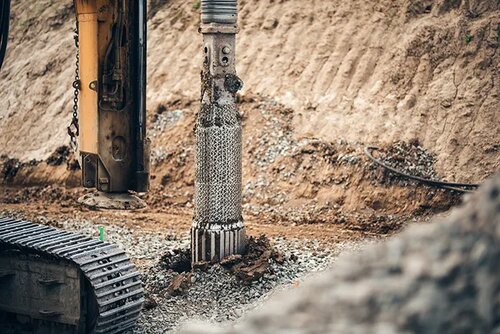
The earth retention system varies between permanent and temporary. Permanent systems are used to achieve long-term stability and are used in large projects and structures that last for many years, ensuring the safety and sustainability of the building in the long run, such as tunnel walls.
Temporary earth retention systems are less expensive and are considered a short-term solution. They are used in temporary dams, temporary flood barriers, or to support excavation sides during construction and are then removed after their purpose is served.
Geotechnical Design Considerations for Soil Support Systems
Geotechnical design must be considered in the earth retention system because these systems help describe sites, select soil, understand its conditions and conduct some tests to determine the soil type and the type of rocks present in it, which facilitates construction operations and ensures the selection of the most appropriate system.
It also helps in designing foundations with high bearing capacity, leading to increased soil bearing capacity for heavy loads to prevent settlement. It also helps support the stability of natural and artificial slopes to prevent landslides and helps the soil withstand earthquakes, as well as helping to create proper drainage for groundwater problems.
Impact of Groundwater on the Efficiency of Earth Retention System
Groundwater significantly affects soil stability and a high groundwater table causes negative effects on structures. Therefore, the groundwater table must be considered when determining the earth retention system and designs must be put in place to remove the harmful effects of this groundwater to increase the lifespan and stability of the building.
This groundwater may lead to the failure of some systems, such as retaining structures, if not designed correctly. Therefore, specialized engineers must be consulted to choose the appropriate system for lands with high groundwater, taking into account water pressure.
Impact of Site Conditions on Choosing the Type of Stabilization System
The choice of stabilization system varies from one area to another depending on the soil type on which construction will take place and project specifications. There are systems and types for fragile sandy soil with large pores between particles and other systems for cohesive clay soils. Laboratory and field tests are also conducted to determine the soil type and its mechanical properties and to choose the appropriate earth retention system to achieve safety and economy.
Conclusion
The earth retention system is one of the essential engineering systems used before and during construction operations. It helps enhance the soil, increase its cohesion and bearing capacity to increase lifespan and safety of the building.
FAQs
What is the earth retaining method?
It is one of the methods used to enhance the engineering properties of soil and increase its strength and durability before or during construction operations.
What are the three types of earth retention systems?
The three most important soil stabilization systems are mechanical such as compaction and reinforcement, chemical such as cement injection and biological such as using plants.
Which retaining wall is best?
The best type of retaining wall varies depending on the soil type, wall height and applied loads. However, cast-in-place concrete and concrete blocks are widely used due to their durability and formability.