
The dynamic compaction of soil is considered one of the most important modern techniques used in soil engineering to improve soil properties and increase its bearing capacity. Dynamic compaction contractors apply this technique using special equipment such as cranes and heavy hammers to reduce soil porosity and enhance its density. This method significantly helps in reducing the risks of settlement and cracking, especially in major projects, thereby ensuring the long-term safety of structures.
This process requires high technical expertise and deep knowledge of soil mechanics and site geotechnical properties which makes the selection of qualified dynamic compaction contractors a vital element in the success of any construction project. In this article, we will talk about dynamic compaction contractors and how to choose the appropriate one.
What is dynamic compaction?
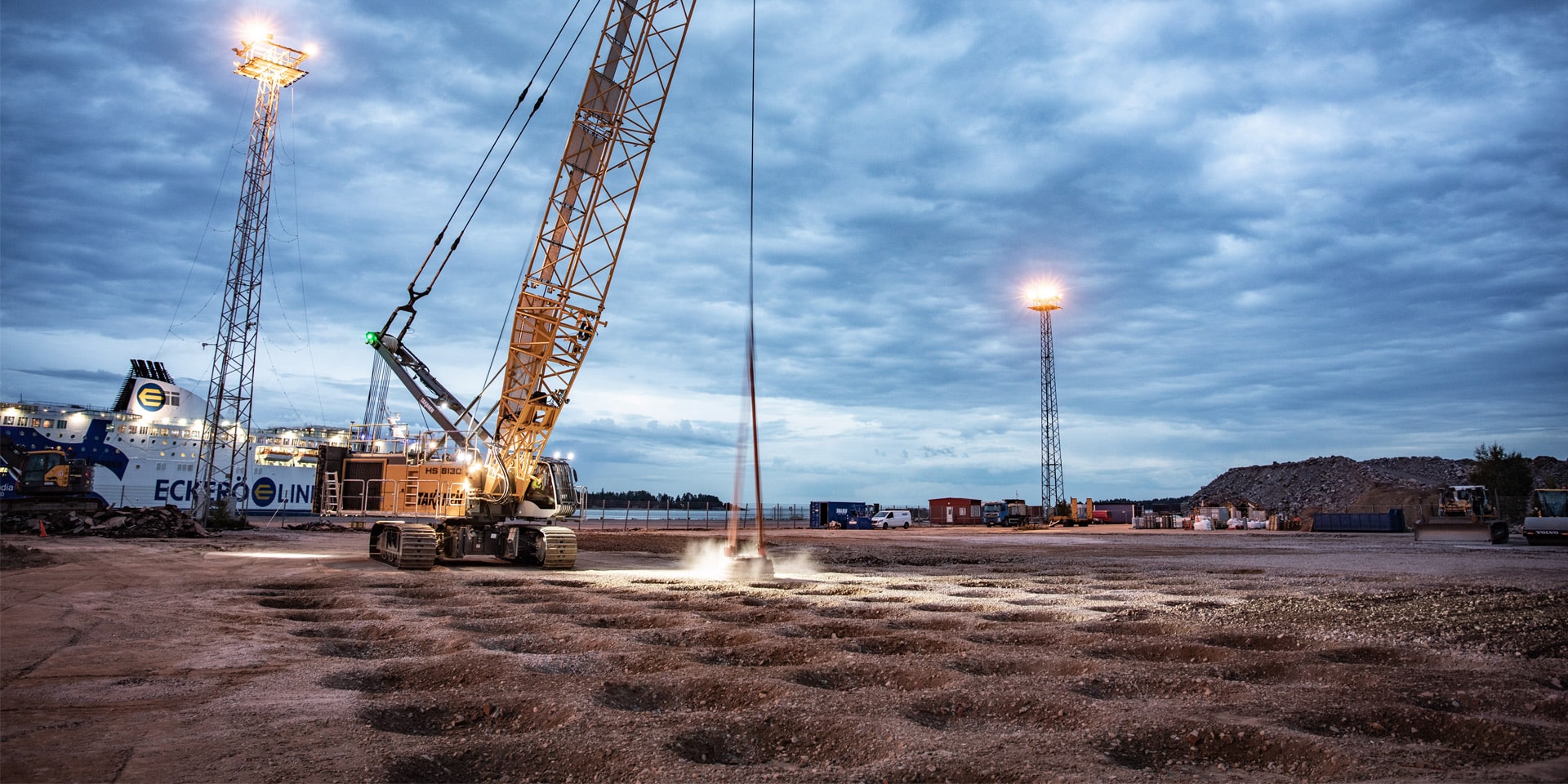
Dynamic compaction is one of the important techniques used to increase soil density which enhances its strength and bearing capacity. This method can increase soil density to great depths by applying high and repetitive impact energy to the soil surface, generating impact stress waves that propagate through the soil, helping rearrange particles and reduce voids.
This method uses a heavy-weight hammer lifted by a crane to a significant height then dropped in free fall repeatedly onto specific points. The choice of weight, height, number of drops, and application pattern depends on the properties of the soil to be improved and the technical specifications of the project to be constructed. It is widely used in large projects such as improving soil for airports, ports, dams, and bridge embankments throughout Saudi Arabia.
Importance of dynamic compaction in Saudi infrastructure projects
Dynamic compaction contractors are utilized in construction projects because the soil in some of its regions faces many challenges such as the presence of irregular fill or loose sandy soil susceptible to settlement or liquefaction. This type of soil is weak and compressible under loads, thus requiring soil improvement before construction. Dynamic compaction significantly helps enhance the soil’s bearing capacity to make it more capable of safely supporting the loads of large projects.
Experienced, skilled, and competent deep dynamic compaction contractors must be employed to obtain the desired results, enhance the strength and stability of foundations, increase the structure’s safety and preserve it for the longest possible period.
Advantages of dynamic compaction

There are many advantages you will gain when using the dynamic compaction method for soil improvement, the most important of which are:
- It is considered an economically effective method compared to some other deep soil improvement methods.
- It can be widely used for different soil types, especially loose granular soils and non-homogeneous fills.
- It is considered a proven and effective method for improving soil properties to great depths.
- Dynamic compaction is a relatively fast technique in execution which may lead to reducing the time used for soil improvement works in the project.
- It does not use chemical materials, so it is considered relatively environmentally friendly compared to chemical stabilization techniques.
- The possibility of easily adjusting compaction energy by changing the hammer weight or drop height according to soil type and project needs.
- Reducing pores in the soil, leading to increased cohesion, density, and reduced susceptibility to settlement.
- Increasing soil density and enhancing its bearing capacity and resistance to liquefaction.
Difference between dynamic compaction and traditional soil improvement methods
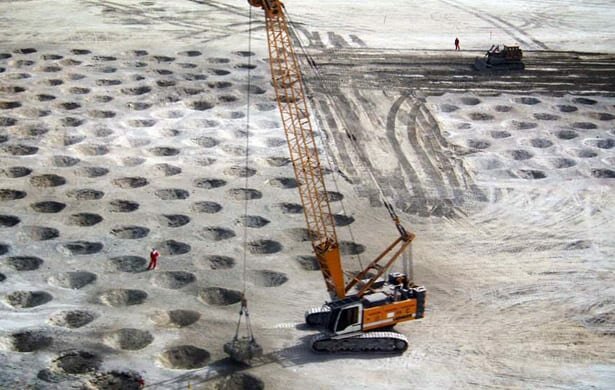
Rapid dynamic compaction is considered one of the techniques used to improve deep soil in large projects because it increases soil density to a great depth and significantly improves its properties. It is also considered a cost-effective option for certain soil types and projects. Therefore, it is widely used in airports, roads, and large construction projects.
Dynamic compaction is considered a technique that does not cause harmful chemical emissions to the environment, thus preserving sustainability, and can be used in various soil types as mentioned earlier.
Other traditional methods for soil improvement may be more costly in some cases or unsuitable for certain conditions. Some other methods may require a longer execution time, while some techniques like chemical grouting may have potential environmental impacts that require careful study.
How to choose a dynamic compaction contractor for your project in Saudi Arabia?
With the rapid development of construction projects in Saudi Arabia, it has become necessary to improve the soil to ensure project durability and increase the lifespan of structures, requiring careful selection of dynamic compaction contractors. Among the most important factors to consider when choosing a dynamic compaction contractor are:
- Experience and Specialization: Verify the contractor’s experience and track record in executing similar successful dynamic compaction projects.
- Equipment and Technical Capabilities: Evaluate the contractor’s available equipment and its suitability for project requirements.
- Certifications and Licenses: Review the necessary licenses and certifications compliant with regulations and standards in Saudi Arabia, ensuring adherence to required standards.
- Quality and Safety: Ensure the contractor follows strict procedures for quality assurance and execution monitoring, and adheres to occupational safety standards on site.
- Cost: Compare technical and financial proposals from several contractors and companies to get the best prices commensurate with the quality of service provided.
- Reputation and Client Reviews: Review opinions of previous clients, either through direct inquiry or by checking the company’s ratings and market reputation.
- Adherence to Schedules and Communication: Discuss adherence to agreed schedules and the communication mechanism between the contractor, client, and supervising engineer, as this leads to the best results.
The difference between a dynamic compaction contractor and ordinary road contractors

Ordinary road contractors typically focus on leveling, paving, and compacting road layers using traditional surface compaction equipment like rollers without intervening in treating deep natural soil. Dynamic compaction contractors specialize in deep soil improvement techniques and treat weak natural soil before construction begins by increasing its density, reducing compressibility, and increasing bearing capacity, providing a more stable and durable foundation for roads or other structures and increasing their lifespan. Therefore, utilizing dynamic compaction contractors is necessary for projects requiring deep soil improvement.
Factors determining the cost of dynamic compaction
The cost of dynamic soil compaction is affected by several factors, including:
- Soil type, its initial properties, and the depth of layers to be treated.
- Project specifications and the required degree of improvement.
- Experience and reputation of the executing company.
- Tools and equipment used such as hammer size, crane type.
- Size and area of the work zone and site access requirements.
- Quality control procedures and necessary tests to verify compaction effectiveness.
Dynamic compaction is considered one of the most important means that can be utilized in constructing roads, bridges, and large projects because it significantly helps stabilize the soil, enhance its strength, reduce its porosity, and increase its bearing capacity. Therefore, when utilizing it for soil improvement, dynamic compaction contractors with extensive experience and great skill must be chosen. WHC is your ideal choice to obtain the desired results, enhance project efficiency, and increase its lifespan.
FAQs
How deep can dynamic compaction go?
The effective depth dynamic compaction can vary by site depending on soil type and applied compaction energy but this method is known to improve soil properties to relatively large depths, ensuring its cohesion for the longest possible period and increasing its bearing capacity.
What is the effectiveness of dynamic compaction?
It is considered a very effective technique for increasing the density of loose granular soils and non-homogeneous fills, enhancing their bearing capacity by reducing porosity and potential settlement.
What is the specification of dynamic compaction?
Dynamic compaction relies on using heavy-weight hammers typically ranging from 5 to 30 tons or more, dropped from a significant height. This generates high impact energy causing the soil to vibrate, reducing its porosity and increasing its density.
What is the difference between static and dynamic compaction?
Static compaction relies on applying steady loads or continuous pressure, while dynamic compaction relies on applying repetitive impact or vibratory loads. Dynamic replacement is often more effective in reaching greater depths in granular soils compared to surface static compaction.