
Ground preparation is a crucial part of any construction project. When working with weak, loose, or compressible soils, the risk of structural failure increases significantly. One of the most effective and cost-efficient solutions to tackle such challenges is Deep Dynamic Compaction (DDC).
Deep Dynamic Compaction Services involve the systematic dropping of heavy weights on the ground surface to densify and strengthen the underlying soil layers. This article provides a comprehensive guide to how this technique works, its benefits, applications, and the various types of dynamic compaction equipment used in the field.
Whether it’s for highways, industrial zones, or land reclamation, dynamic compaction ground improvement is a proven method for creating a solid foundation.
What is Deep Dynamic Compaction?

Deep Dynamic Compaction Services is a ground improvement technique that involves dropping large weights (typically 5–30 tons) from significant heights (10–30 meters) repeatedly onto the ground surface. The impact energy from these drops densifies the soil layers below, improving their bearing capacity and reducing settlement potential.
This dynamic compaction method was first developed in the 1960s and has since been used worldwide for large-scale construction and land development.
Key benefits:
- Increased soil density.
- Improved bearing capacity.
- Reduction in long-term settlement.
- Cost-effective compared to deep foundation systems.
How Does the Dynamic Compaction Method Work?
The dynamic compaction method works by transmitting energy into the ground through repeated heavy impacts. The soil responds by rearranging its particles into a denser configuration, reducing voids and increasing strength.
Key parameters:
- Drop weight: 5 to 30 tons
- Drop height: 10 to 30 meters
- Number of drops per location: 3 to 10 (or more)
- Grid spacing: 3 to 8 meters depending on soil and load conditions
Process steps:
- Soil investigation and energy calculation
- Site preparation and layout
- Weight drop using a crane or dynamic compaction roller
- Repeated passes until desired compaction is achieved
- Surface leveling and compaction with light rollers
This process is often used in combination with rapid dynamic compaction techniques for the top layer or where time constraints exist.
Suitable Soil Types for Deep Dynamic Compaction

DDC is most effective in granular soils, such as:
- Loose sand
- Silty sand
- Gravel
- Fills and reclaimed land
While cohesive soils (clays) do not densify as easily, DDC can still break down weak zones and improve stiffness when used in combination with dynamic replacement or pre-treatment (like drainage or drying).
Unsuitable conditions include:
- Organic or peat soils
- Saturated clays with high plasticity
- Contaminated sites (due to vibration and groundwater risks)
Applications of Dynamic Compaction Ground Improvement
Deep Dynamic Compaction Services are widely used in:
- Airport runway construction
- Container terminals and ports
- Oil and gas facilities
- Highway embankments
- Residential and industrial development
- Landfill capping and mine reclamation
Case example: In Dubai, dynamic compaction ground improvement was used for several coastal developments on reclaimed land, significantly enhancing soil strength for building high-rise towers.
Dynamic Compaction Equipment Overview
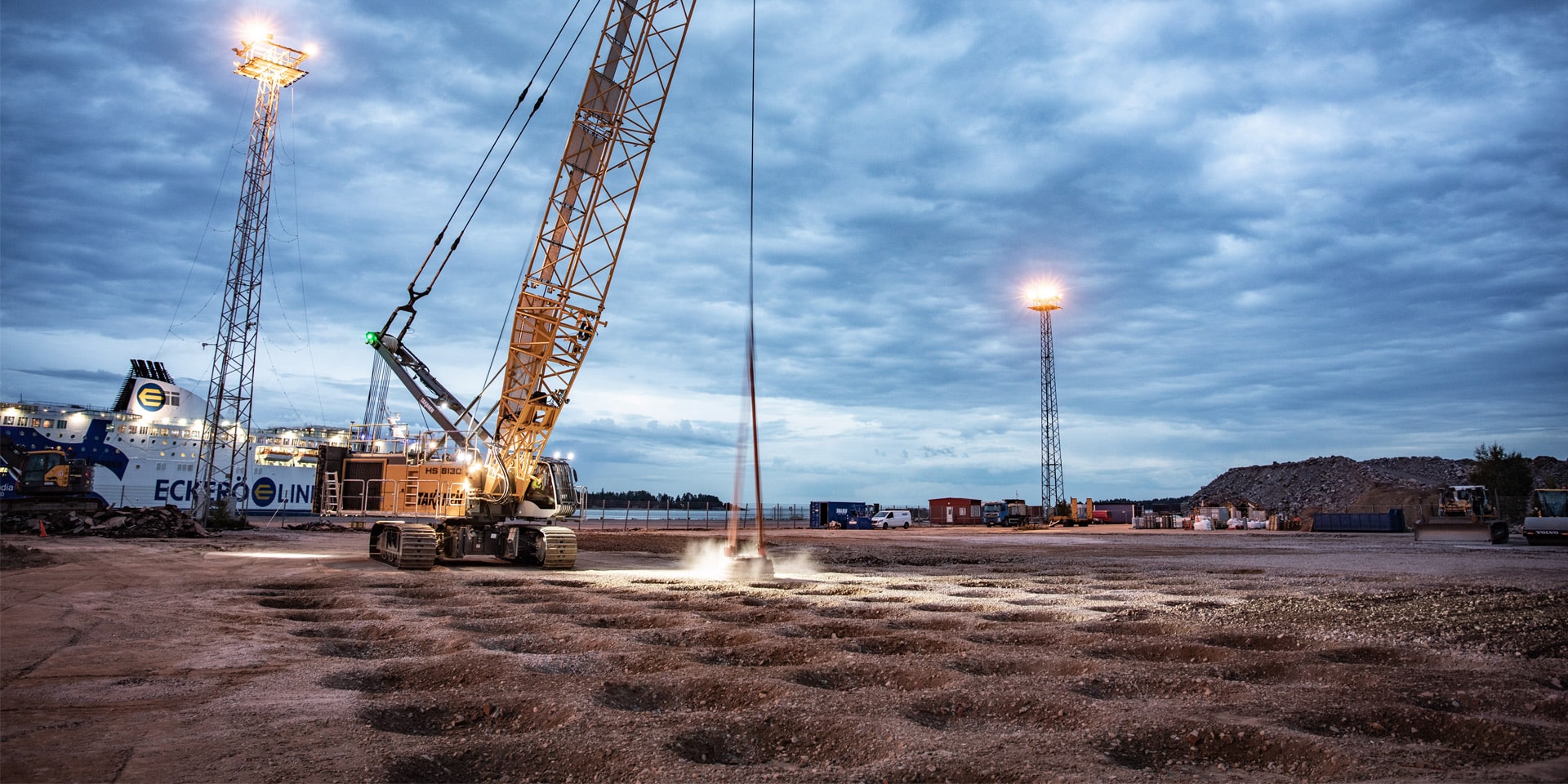
Several types of dynamic compaction equipment are used based on project scale, depth, and energy requirements.
Main components:
- Drop weights (tampers): Steel or concrete blocks, often ranging from 5–30 tons
- Cranes: Used to lift and drop the weight
- Specialized rigs: Purpose-built machines that allow precise positioning and controlled dropping
- Dynamic compaction roller: A heavy roller with a raised drum designed to deliver vertical impact energy in rapid succession, often used for shallow layers or final surface treatment
Proper selection of equipment is crucial for achieving consistent and safe results on-site.
Dynamic Replacement for Soft Soils
For soft or highly compressible soils where traditional DDC is less effective, dynamic replacement is used. This method combines DDC with the installation of granular material into craters formed by heavy tamping.
Process:
- Drop weight creates a crater
- Granular material (e.g., crushed stone) is placed into the crater
- Continued tamping drives the material deeper
- Creates vertical columns of compacted stone
This technique provides reinforcement, drainage, and densification, making it an excellent solution for clayey or organic soils where deep dynamic compaction services alone would not suffice.
Rapid Dynamic Compaction for Surface Treatment
Rapid dynamic compaction is a newer variation of the DDC technique. It uses lighter weights and faster drop rates to compact shallow soil layers more efficiently.
Used in:
- Road and pavement subgrades
- Wind farm platforms
- Parking lots
- Industrial yards
Advantages:
- Faster treatment time
- Reduced noise and vibration
- Ideal for smaller-scale or urban projects
While it doesn’t reach the depths of traditional DDC, rapid dynamic compaction is an excellent complementary method for top-layer treatment.
Advantages of Deep Dynamic Compaction Services

Economic Benefits:
- Reduces need for deep foundations or soil replacement
- Shorter project timelines
- Reuses existing on-site fill materials
Environmental Benefits:
- No chemical additives
- Minimal excavation
- Low carbon footprint compared to piling
Technical Benefits:
- High improvement depth (up to 10–15 meters)
- Applicable to large areas
- Long-term soil stability
Limitations and Considerations
While dynamic compaction ground improvement is highly effective, it’s not suitable for every situation.
Considerations:
- Vibration-sensitive environments (urban areas, old structures)
- Noise pollution from dropping weights
- Groundwater level (may require dewatering)
- Safety concerns (falling weights, flying debris)
Also, post-compaction testing (CPT, SPT, or settlement monitoring) is essential to verify the effectiveness of the treatment.
Integrating DDC into Ground Improvement Strategies

Deep Dynamic Compaction Services can be used alone or as part of a broader ground improvement program that includes:
- Preloading
- Vertical drains
- Geosynthetics
- Grouting
- Soil stabilization
Engineers often perform trial drops and test sections to determine the optimum energy, grid spacing, and number of passes required to meet project specifications.
Conclusion: The Future of Ground Stabilization with Dynamic Compaction
As construction continues to expand into reclaimed, filled, or weak soils, the demand for robust and cost-effective soil improvement continues to grow. Deep Dynamic Compaction Services offer a proven, efficient method for increasing soil strength without the need for deep piling or expensive soil replacement.
Whether it’s improving port terminals in sandy soils, stabilizing fill for highways, or preparing land for industrial facilities, the dynamic compaction method is a critical tool in the geotechnical engineer’s toolbox.
With advances in dynamic compaction equipment, better monitoring tools, and the combination of techniques like dynamic replacement and rapid dynamic compaction, the method is more versatile and effective than ever.
In today’s era of smart, sustainable construction, Deep Dynamic Compaction Services stand out as a reliable, eco-friendly, and high-performance solution for creating solid ground literally.
Frequently Asked Questions (FAQs)
How deep can dynamic compaction reach?
Typically, DDC can improve soils up to 10–15 meters deep, depending on the drop weight, height, and soil type.
What kind of soils benefit the most from DDC?
Loose sands, gravels, and granular fills respond best. Soft clays and organic soils require dynamic replacement or additional techniques.
What is a dynamic compaction roller used for?
It’s used for rapid surface compaction in shallow soils. Ideal for roads, platforms, and small infrastructure.
Is dynamic compaction suitable near existing buildings?
Caution must be taken. Vibration monitoring and buffer zones are required to avoid structural damage.
Can DDC be used on contaminated sites?
It’s generally avoided on heavily contaminated soil due to the risk of spreading pollutants via vibration and ground disturbance.