
Foundations are one of the most critical elements of any construction project. For high-rise buildings, bridges, flyovers, or heavy industrial structures, strong foundations are essential for stability and longevity. Among the most reliable deep foundation techniques is bored piling a method known for its high load capacity and versatility in complex soil conditions.
This article provides an in-depth exploration of bored piling construction, how it works, the equipment involved, and when to choose this method over others.
What is Bored Piling?
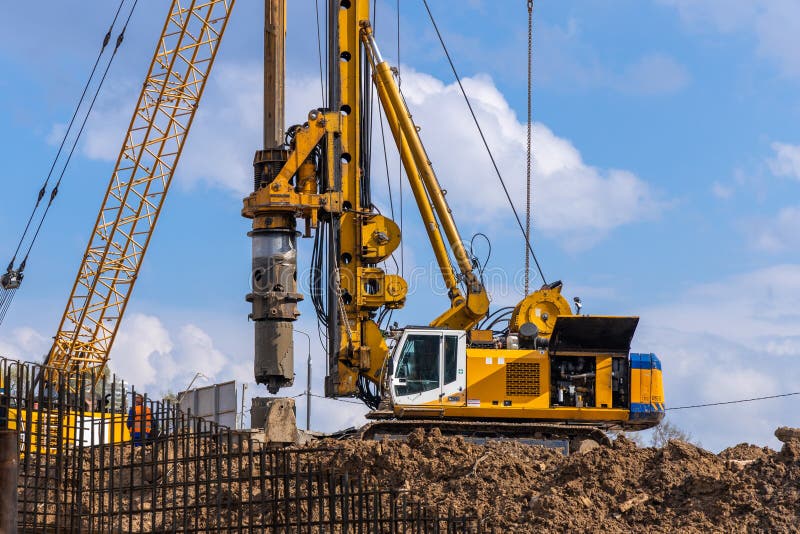
Bored piling refers to a process in which cylindrical holes are drilled into the ground and then filled with reinforced concrete to form deep foundations. Unlike driven piles, bored pile construction causes minimal vibration, making it ideal for urban environments and sites near sensitive structures.
Why it’s used:
- To transfer structural loads deep into stable soil strata
- To avoid noise and vibration in built-up areas
- To handle large vertical and lateral loads
- To support heavy superstructures like skyscrapers, bridges, and towers
The bored piling method can reach depths of over 50 meters and diameters ranging from 450 mm to 2500 mm or more, depending on project needs.
When to Use Bored Piling Construction
Bored piling construction is typically selected under the following conditions:
- Weak surface soils (clays, fills, peat)
- Heavy structural loads
- Proximity to existing buildings
- Underground obstructions requiring careful excavation
- Projects with stringent environmental or noise restrictions
This method is commonly used in:
- Metro rail systems
- Deep basements and parking structures
- Retaining walls and diaphragm walls
- Offshore platforms and marine works
In short, bored piles are ideal where deep, vibration-free foundations are critical for safety and performance.
Bored Piling Procedure: Step-by-Step

Understanding the bored piling procedure is essential for proper planning, execution, and quality control.
Step 1: Site Investigation and Layout
Before drilling begins, geotechnical tests are conducted to understand soil layers, water tables, and load-bearing capacity.
Step 2: Mobilization of Bored Piling Equipment
Heavy equipment such as the bored piling rig, crane, and slurry tanks are transported to the site.
Step 3: Borehole Drilling
The bored piling machine drills vertically into the ground using a rotary bucket or auger. Temporary casing may be installed to prevent wall collapse.
Step 4: Cleaning and Inspection
The borehole is cleaned of loose debris using air or water flushing, and sometimes slurry stabilization is maintained.
Step 5: Reinforcement Cage Placement
Steel reinforcement cages are lowered into the cleaned borehole using a crane.
Step 6: Concreting
Concrete is poured through a tremie pipe from the bottom up to prevent contamination and ensure uniform placement.
Step 7: Finishing and Curing
The top of the pile is trimmed to the required level, and the pile head is cured as per the specification.
Bored Piling Method Types
There are several variations of the bored piling method, each tailored to site conditions and design requirements:
a) Dry Method
Used in cohesive soils where groundwater is not a concern. No slurry or casing is required.
b) Temporary Casing Method
Steel casing is inserted into the borehole to support unstable soils or areas with collapsing ground.
c) Bentonite or Polymer Slurry Method
Used in loose, water-logged soils. Slurry stabilizes the borehole walls until concrete is poured.
Each method requires careful monitoring to prevent soil collapse and ensure the structural integrity of the pile.
Bored Piling Equipment Overview
Various specialized bored piling equipment is used in modern piling operations:
a) Bored Piling Rig
The central machine used to drill into the ground. It includes a rotary drive system, mast, Kelly bar, and augers or buckets.
b) Tremie Pipes
Used for underwater or slurry-based concreting to avoid segregation.
c) Temporary Casings
Steel tubes used to support the borehole during excavation.
d) Slurry Plants
For storing and recycling bentonite or polymer slurry.
e) Cranes and Winches
Used for handling reinforcement cages and heavy materials.
Modern bored piling machines are equipped with GPS, depth monitoring, torque control, and other digital features for high accuracy and quality control.
Advantages of Bored Pile Construction

Bored pile construction offers numerous advantages:
- High Load Capacity: Capable of carrying heavy axial and lateral loads
- Vibration-Free: Suitable near old or sensitive structures
- Quiet Operation: Minimizes noise in residential or urban zones
- Large Diameters & Depths: Customizable based on soil and load
- Flexible Placement: Can be constructed at any location on site
Compared to driven piles, bored piles are often more stable and better suited for soft or heterogeneous soils.
Limitations of Bored Piling Method
Despite its many benefits, bored piling construction does come with some challenges:
- Longer Execution Time: Compared to driven piles
- Weather Sensitivity: Rain or flooding can delay operations
- More Equipment Needed: Including cranes, rigs, slurry plants
- Higher Skill Requirement: Especially for tremie concreting and cage installation
- Spoil Disposal: Excavated soil must be properly removed
Proper planning, quality control, and skilled labor are essential for minimizing risks during the bored piling procedure.
Safety Considerations in Bored Piling Projects
Safety is paramount in bored piling works, especially due to the presence of deep holes, heavy equipment, and crane operations.
Key precautions:
- Secure boreholes with barricades or covers
- Use trained operators for bored piling machines
- Regularly inspect bored piling rigs for mechanical integrity
- Ensure proper PPE (helmets, boots, gloves) for workers
- Monitor air quality and fumes near slurry tanks
Following international standards such as OSHA, BS EN 1536, and local regulations is critical.
Quality Control and Testing
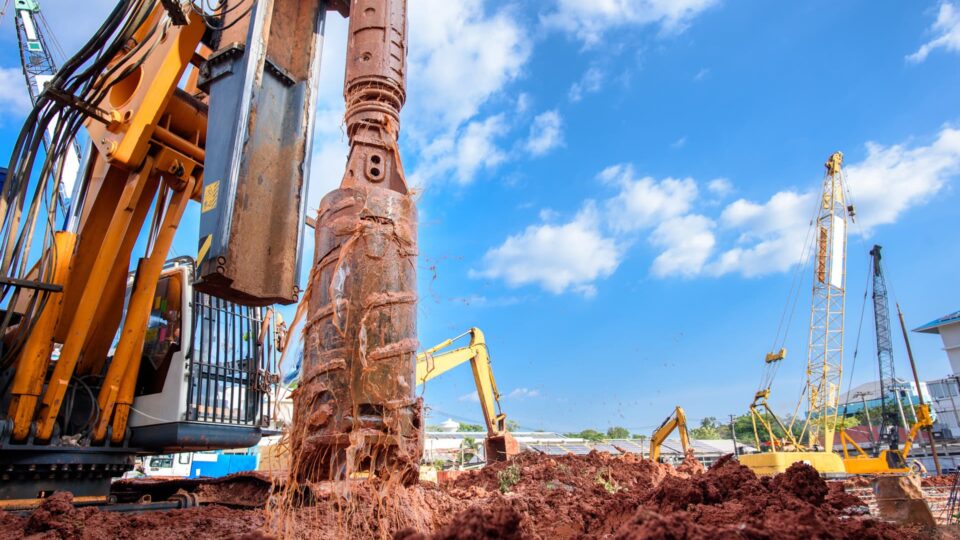
Quality assurance during and after bored pile construction is necessary to confirm performance and compliance.
Common tests include:
- Verticality Testing: Ensures the pile is not leaning
- Pile Integrity Testing (PIT): Checks for cracks or voids
- Static Load Testing: Measures actual load-bearing capacity
- Crosshole Sonic Logging (CSL): Detects defects in concrete quality
- Rebar Cage Inspection: Confirms depth, position, and alignment
These checks guarantee that the pile performs as designed and prevents costly future repairs.
Innovations in Bored Piling Equipment and Methods
Modern technology is transforming the piling industry.
a) Automated Bored Piling Rigs
Equipped with real-time monitoring, automated drilling, and GPS guidance.
b) Polymer Slurry Systems
Environmentally friendly and reusable alternatives to bentonite.
c) Low-Noise Bored Piling Machines
Used in hospitals, schools, or areas with noise restrictions.
d) Remote Monitoring
Allows engineers to supervise operations remotely via telemetry.
As urban density and engineering challenges grow, innovations in bored piling equipment and software-driven control systems make projects safer, faster, and more efficient.
Conclusion: Why Choose Bored Piling?
In today’s era of high-rise buildings, underground metros, and massive infrastructure, deep and stable foundations are non-negotiable. Bored piling construction is one of the most dependable, customizable, and technically sound solutions for deep foundations.
Its flexibility to adapt to different soil conditions, ability to handle massive loads, and minimal vibration make it ideal for modern urban environments. With advances in bored piling equipment and greater emphasis on automation and safety, this method continues to set the standard for foundation engineering.
From bridges and skyscrapers to marine platforms and industrial parks, bored pile construction ensures that structures not only stand tall but stay strong for generations.
Frequently Asked Questions (FAQs)
How deep can a bored pile go?
Bored piles can reach depths of over 60 meters, depending on design needs and soil conditions.
What is the difference between bored piles and driven piles?
Bored piles are constructed by drilling and pouring concrete in-situ, while driven piles are prefabricated and hammered into the ground. Bored piles cause less vibration.
What equipment is needed for bored piling?
Main equipment includes a bored piling rig, crane, slurry tanks, tremie pipes, casings, and reinforcement cages.
What type of soil is best for bored piling?
Bored piles are ideal for soft to medium soils, loose sands, clays, and layered ground conditions.
Is bored piling suitable in water-logged areas?
Yes. Using slurry or casing, bored piling can be successfully executed even in high water table conditions.